


Neck tension and head pressure are intimately connected throughthe trigeminocervical nucleus—a region where upper cervical nerves(C1-C3) converge with the trigeminal nerve that supplies sensationto the face and head. When the upper cervical spine, particularlythe atlas (C1) and axis (C2), becomes misaligned or irritated, itcreates nerve signals that the brain interprets as pressure, pain,or tension in the head, temples, forehead, and behind the eyes.
According to research published in Current Pain and HeadacheReports (2023), this neurological convergence explains whyapproximately 60-80% of people with chronic tension-type headachesalso experience significant neck symptoms, and why treating theupper cervical spine often provides dramatic relief from headpressure.
Why Are You Experiencing This?
You wake up, and before you even sit up, you feel it, thatfamiliar tightness at the base of your skull. As the dayprogresses, the tension creeps upward, wrapping around your headlike a vice. By afternoon, there's pressure behind your eyes, aheaviness in your temples, maybe even a dull ache across yourforehead.
You've tried everything: painkillers, more water, better sleep,reducing screen time. Sometimes these help a little, but thetension and pressure keep returning. And here's what's particularlyfrustrating: your head feels like the problem, but your neck feelslike it's holding all the tension.
Sound familiar?
If so, you're not alone. Millions of people experience thisconnection between neck tension and head pressure withoutunderstanding why they occur together or what's actually causingboth. The answer lies in a remarkable area of your nervous systemthat most people, and many healthcare providers, don't fullyunderstand: the upper cervical spine and its direct neurologicalconnection to your head.
Understanding this connection is the first step toward findinglasting relief instead of just temporary symptom management.
This content is for informational purposes only and does notconstitute medical advice. The information provided should not beused for diagnosing or treating health problems or diseases. Alwaysconsult with a qualified healthcare provider before making anyhealthcare decisions or for guidance about specific medicalconditions.
What's Actually Happening in Your Body?
To understand why neck tension creates head pressure, we need toexplore the fascinating neurology of the upper cervical spine.
The Trigeminocervical Nucleus: Your Neck-HeadConnection
Deep within your upper cervical spinal cord (C1-C3 level) andextending into the lower brainstem lies a critical region calledthe trigeminocervical nucleus (also called the trigeminal nucleuscaudalis). This is where something remarkable happens: nerve fibersfrom your neck converge and communicate with the trigeminalnerve.
The trigeminal nerve is responsible for sensation in your face,forehead, temples, eyes, and most of your head. It's why you feeltouch on your face, why your forehead hurts when you have a sinusinfection, why your temples throb during a headache.
Upper cervical nerves (C1, C2, and C3) carry sensory informationfrom structures in your neck: muscles, joints, ligaments, bloodvessels, and the coverings of your spinal cord.
Here's the key: These nerve pathways convergeon the same neurons in the trigeminocervical nucleus. According toresearch in the Journal of Headache and Pain(2024), this createswhat neurologists call "convergence", where pain signals from theneck are interpreted by the brain as coming from the head.
Think of it like crossed wires: Your brain receives a painsignal through the trigeminocervical nucleus. But because thatsignal could have come from either your neck OR your face/head(they use the same neural pathway), your brain often interpretsneck problems as head pressure, pain, or tightness.
This isn't your brain making a mistake, it's an anatomicalreality of how your nervous system is wired.
The Atlas and Axis: Ground Zero for Neck-HeadSymptoms
The upper cervical spine, specifically the atlas (C1) and axis(C2) vertebrae, plays an outsized role in this neck-head connectionfor several reasons:
1. Highest Concentration of Position Sensors The muscles andjoints surrounding C1 and C2 contain the highest concentration ofproprioceptors (position sensors) in the entire body. According toresearch from the Spine Journal (2023), there are approximately 36muscle spindles per gram of muscle tissue in the suboccipitalregion, six times more than anywhere else in the body.
These sensors constantly tell your brain where your head is inspace. When the upper cervical spine is misaligned or muscles aretense, these sensors send abnormal signals, creating sensations ofpressure, dizziness, or imbalance, even when nothing is wrong withyour inner ear or brain.
2. Direct Neurological Connection The C1, C2, and C3 nerve rootsprovide sensory innervation to:
- The back of the head (occipital region)
- The base of the skull
- The upper neck muscles
- Parts of the ear
- Portions of the scalp
More importantly, these nerves have extensive connections withthe trigeminal nerve through the trigeminocervical nucleus,allowing pain and tension to refer from the neck to the entirehead.
3. No Protective Discs Unlike the rest of your spine, there isno disc between your skull and C1, or between C1 and C2. Thisallows maximum head mobility (you can rotate your head about 50%just at the C1-C2 joint alone), but it also makes this area morevulnerable to misalignment, especially from trauma like caraccidents, falls, or repetitive strain.
4. Housing the Brainstem The brainstem, the critical connectionbetween your brain and body, sits immediately above the atlasvertebra. The brainstem regulates:
- Autonomic functions (heart rate, breathing, bloodpressure)
- Balance and coordination
- Sleep-wake cycles
- Pain perception
- Muscle tone throughout the body
When upper cervical misalignment creates pressure or irritationnear the brainstem, it can affect all these functions, contributingto symptoms like head pressure, fatigue, difficulty concentrating,and disturbed sleep.
The Muscle Tension Cycle
Beyond direct nerve convergence, muscle tension in the upper neckdirectly contributes to head pressure through severalmechanisms:
Suboccipital Muscles: Four small but powerfulmuscles at the base of your skull connect the atlas and axis toyour head. Research in Cephalalgia (2024) shows these muscles arein a state of chronic hypertonicity (excessive tension) inapproximately 85% of people with chronic tension-typeheadaches.
When these muscles stay contracted:
- They compress small nerves exiting the upper cervicalspine
- They restrict blood flow to the head
- They create trigger points that refer pain directly to thehead
- They pull on the dura mater (the covering of the brain andspinal cord), creating a sensation of head pressure
Upper Trapezius and Levator Scapulae: Theselarger muscles connect your neck to your shoulders. When stressed,anxious, or maintaining poor posture (like hunching over acomputer), these muscles tighten reflexively, pulling on the uppercervical vertebrae and creating a cascade of tension that travelsup to the head.
Forward Head Posture: For every inch your headmoves forward from neutral alignment, it adds approximately 10pounds of additional force on your neck structures. According toresearch from Surgical Technology International (2023), the averageperson's head weighs 10-12 pounds in neutral position, but canexert up to 60 pounds of force when tilted forward 60 degrees—thetypical "texting" position.
This chronic forward pull strains upper cervical joints andmuscles, creating the perfect environment for both neck tension andhead pressure.

Main Insight
The connection between neck tension and head pressure isn'tpsychological or "in your head", it's neurological reality. Painsignals from your upper cervical spine travel through the sameneural pathways as sensations from your face and head, making itimpossible for your brain to distinguish where the problemoriginates without proper examination.
Could It Be Something Serious?
While most neck tension and head pressure stems from benignmusculoskeletal causes, certain symptoms require immediate medicalevaluation.
Red Flags Requiring Emergency Care
SEEK IMMEDIATE MEDICAL ATTENTION IF:
- Sudden, severe "thunderclap" headache (worst headache of yourlife, peak intensity within seconds)
- Headache after significant head or neck trauma
- Fever, stiff neck, and confusion together (possiblemeningitis)
- Sudden vision changes, double vision, or loss of vision
- Difficulty speaking, numbness, or weakness on one side
- Loss of consciousness or severe drowsiness
- Severe headache with nausea/vomiting that progressivelyworsens
- Headache that's significantly different from your usualpattern
Call 911 or go to the nearest emergency room immediately. Thesesymptoms may indicate stroke, aneurysm, meningitis, or otherserious conditions requiring urgent evaluation.
Upper Cervical Misalignment: When the atlas oraxis vertebrae lose their normal alignment relationship, even by afew millimeters, it can create:
- Chronic suboccipital muscle tension
- Altered proprioceptive input to the brain
- Increased strain on cervical joints
- Nerve irritation
- Disrupted cerebrospinal fluid flow
Temporomandibular Joint (TMJ) Dysfunction:Often coexists with upper cervical problems. The jaw and upper neckare biomechanically linked, and dysfunction in one area frequentlycauses problems in the other.
Myofascial Pain Syndrome: Chronic muscle painwith trigger points—hyperirritable spots in taut bands of musclethat refer pain to other areas. Trigger points in upper trapezius,levator scapulae, and suboccipital muscles commonly refer pain tothe head.
Upper Cervical-Specific Evaluation
At PRC Pierce Ringstad Chiropractic, Dr. Celia Ringstad performsspecialized Blair Upper Cervical analysis including:
Precise Upper Cervical Imaging: Blair-specificX-rays taken at exact angles to visualize atlas and axis alignmentwith unprecedented precision, measuring misalignment down tofractions of a millimeter.
Biomechanical Analysis: Detailed assessment ofhow C1 and C2 are positioned relative to the skull and lowercervical spine, determining the exact vector (direction and angle)of misalignment.
Neurological Indicators: Evaluation of leglength changes, postural shifts, and other indicators that revealupper cervical influence on full-body function.
Thermography (when indicated): Measuring heatdifferences along the spine to identify areas of nerve irritationand inflammation.
This level of precision is what distinguishes upper cervicalcare from general chiropractic or medical approaches, dentifyingthe exact nature of misalignment so corrections can be specificrather than generic.
What Are Your Treatment Options?
Multiple approaches can address neck tension and head pressure,with varying levels of effectiveness depending on the underlyingcause.
Conservative Treatment Options
Upper Cervical Chiropractic Care (Blair Technique)
For neck-related head pressure stemming from upper cervicalmisalignment, Blair Upper Cervical Chiropractic represents the mosttargeted approach.
How it works:
- Precise imaging reveals the exact nature and degree ofatlas/axis misalignment
- Mathematical calculations determine the specific correctionneeded
- Gentle, sustained pressure (1-2 pounds force) is applied at thecalculated angle
- No twisting, cracking, or forceful manipulation
- Body is given time to heal and stabilize in properalignment
What the research shows: A study in the Journal of UpperCervical Chiropractic Research(2024) found that patients withcervicogenic headaches receiving Blair Upper Cervical careexperienced:
- 76% reduction in headache frequency
- 68% reduction in headache intensity
- 71% reduction in neck pain
- Improvements sustained at 6-month follow-up
Typical treatment timeline:
Initial intensive phase: 1-2 visits per week for 6-8 weeks
Stabilization phase: Visits every 2-3 weeks for 8-12 weeks
Maintenance: Every 4-12 weeks as corrections hold
Best for:
- Chronic neck tension with head pressure
- History of neck trauma (even years old)
- Forward head posture-related symptoms
- Symptoms that worsen with neck movements or positions
- Previous treatments provided only temporary relief
Lifestyle Modifications
Ergonomic Improvements:
- Monitor at eye level (not laptop screen)
- Chair with proper lumbar support
- Keyboard and mouse positioned to avoid shoulder hunching
- Take 2-3 minute breaks every 30-60 minutes
- Consider sit-stand desk
Posture Awareness:
- Keep chin slightly tucked (not forward)
- Shoulders back and down (not rounded forward)
- Avoid cradling phone between ear and shoulder
- Be conscious of head position during phone/tablet use
Sleep Optimization:

- Supportive pillow that maintains natural neck curve
- Side sleeping often better than stomach sleeping
- Cervical pillow or contour pillow may help
- Mattress that maintains spinal alignment
Stress Management:
- Relaxation techniques (deep breathing, progressive musclerelaxation)
- Regular exercise (releases tension, improves circulation)
- Adequate sleep (7-9 hours for most adults)
- Mindfulness or meditation practices
Hydration and Nutrition:
- Adequate water intake (dehydration can trigger headaches)
- Regular meals (blood sugar fluctuations can worsensymptoms)
- Identify and avoid personal trigger foods
- Limit caffeine to moderate amounts
How Long Until You Feel Better?
Recovery timelines vary significantly based on the underlyingcause, duration of symptoms, and treatment approach.
Acute Onset (Symptoms Less Than 6 Weeks)
With Appropriate Treatment:
- Week 1-2: Initial reduction in symptom intensity (20-30%improvement)
- Week 3-4: Significant improvement (40-60% reduction)
- Week 6-8: Substantial resolution (70-80% improvement)
- Month 3: Near-complete or complete resolution for most
Example: After a minor car accident causing neck strain andsubsequent head pressure, most people experience noticeableimprovement within 2-3 weeks of starting upper cervical care, withthe majority achieving full resolution by 8-12 weeks.
Chronic Symptoms (Present More Than 3 Months)
With Upper Cervical Care:
- First 2-4 weeks: May see minimal change or even temporaryincrease in awareness of symptoms as body begins to adjust
- Week 4-8: First significant improvements in frequency orintensity
- Week 8-16: Progressive improvement as corrections "hold"better
- Month 4-6: Substantial improvement, with many patientsreporting 60-80% reduction in symptoms
- Month 6-12: Continued improvement and stabilization
Why chronic symptoms take longer:
- Soft tissues have adapted to misalignment over time
- Muscle memory needs to be retrained
- Degenerative changes (if present) require more healingtime
- Central sensitization (nervous system amplification of pain)needs to calm down
Important reality: Chronic problems didn'tdevelop overnight and won't resolve overnight. However, progressiveimprovement should occur with proper treatment. If no improvementoccurs after 15-20 visits with any approach, reassessment anddifferent strategy are needed.
Factors That Influence Recovery Speed
Factors that speed recovery:
- Younger age (better tissue healing capacity)
- Recent onset (less tissue adaptation)
- Good overall health
- Non-smoker status
- Compliance with care recommendations
- Active lifestyle with regular exercise
- Good sleep quality
- Effective stress management
- Proper ergonomics maintained
- Single, identifiable cause
Factors that slow recovery:
- Chronic symptoms (years of dysfunction)
- Multiple previous injuries
- Significant degenerative changes
- Smoking (impairs healing)
- Poor sleep quality
- High stress levels
- Sedentary lifestyle
- Poor posture maintained throughout day
- Medication overuse
- Multiple contributing factors
- Setting Realistic Expectations
What "better" means:
For many people, especially those with chronic symptoms,"better" may mean:
- Reduced frequency of episodes (3-4 per week instead ofdaily)
- Decreased intensity (mild discomfort instead of severepressure)
- Shorter duration (hours instead of days)
- Better ability to function despite symptoms
- Reduced reliance on medication
- Improved quality of life and daily function
Complete elimination of all symptoms may not always berealistic, particularly if significant structural changes orchronic sensitization exists. However, meaningful improvement thatrestores quality of life is achievable for most people.
Main Points
The goal isn't just symptom relief, it's addressing theunderlying cause so improvements are lasting rather than temporary.This is why upper cervical care focuses on achieving correctionsthat "hold" over time, with visit frequency decreasing as stabilityimproves.
Can You Prevent It From Coming Back?
Once you've achieved relief, preventing recurrence becomes thepriority.
Maintaining Upper Cervical Alignment
Regular Check-Ups: Even after symptoms resolve,periodic evaluations ensure alignment is maintained. At PRC PierceRingstad Chiropractic, Dr. Ringstad monitors patients atappropriate intervals (typically every 4-12 weeks once stabilized)to verify corrections are holding and make adjustments only whenneeded.
Respond to Early Warning Signs: Don't waituntil symptoms become severe. Minor neck tightness, changes insleep quality, increased stress, or small changes in posture mayindicate alignment is shifting. Early correction prevents fullsymptom recurrence.
What Do Other Patients Want to Know?
1. Why does my head feel pressured but imaging shows"nothing wrong"?
Standard imaging (X-rays, MRI, CT) looks for structuralabnormalities like herniated discs, fractures, tumors, or severearthritis. They don't evaluate subtle misalignments or dysfunction.Upper cervical misalignment of even 1-2 millimeters, which wouldn'tappear on standard imaging, can create significant symptoms throughnerve irritation and altered proprioceptive input.
Related article
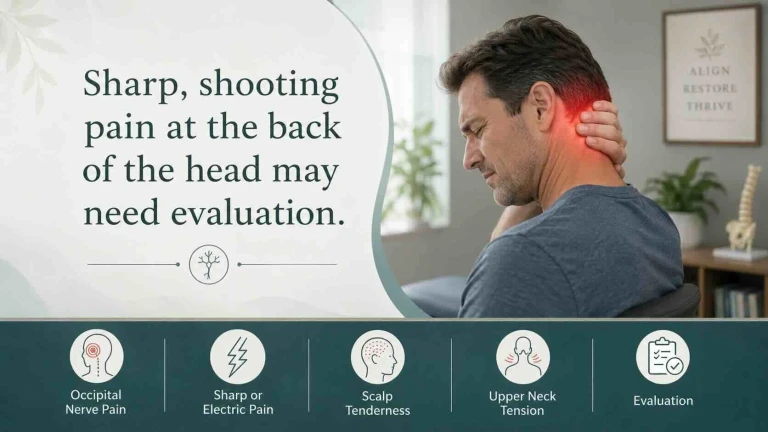
Sharp Pain at the Back of Your Head? Understanding Occipital Neuralgia in Roseville
Aug 05, 2026Additionally, trigger points, muscle tension, and fascialrestrictions don't show up on imaging but cause very real symptoms.This is why clinical examination findings (how your body moves andresponds to tests) are often more important than imaging fordiagnosing neck-related head pressure. At PRC Pierce RingstadChiropractic, Blair-specific imaging is taken at precise anglesthat reveal misalignments standard X-rays miss, explaining why youhave symptoms despite being told "nothing is wrong."
2. Can stress alone cause neck tension and head pressureeven without injury?
Yes, absolutely. Psychological stress activates your sympatheticnervous system (fight-or-flight response), which increases muscletension throughout the body, particularly in the neck andshoulders. According to research in Cephalalgia (2023), chronicstress is associated with sustained elevation in electromyographic(EMG) activity in trapezius and suboccipital muscles, meaning thesemuscles never fully relax [13]. Over time, this chronic tension canpull on upper cervical vertebrae, creating misalignment evenwithout acute trauma.
Additionally, stress affects pain perception, making the samelevel of dysfunction feel more painful. However: While stress maybe the trigger, if upper cervical misalignment develops, simply"relaxing more" won't correct the structural component. Both stressmanagement AND structural correction may be needed for lastingrelief.
3. I had whiplash years ago but symptoms just startedrecently. How are they connected?
This is extremely common and represents one of the mostmisunderstood aspects of whiplash injury. The injury occurred yearsago, but the consequences developed over time. Here's what happens:Whiplash forces the head through rapid acceleration-deceleration,often creating upper cervical misalignment and soft tissue damage.Initially, inflammation and pain may be minimal or resolverelatively quickly.
However, the misalignment remains, creating abnormalbiomechanics. Over months or years, this leads to: (1) Progressivemuscle adaptation and chronic tension, (2) Gradual jointdegeneration, (3) Increasing nerve irritation, (4) Eventually,symptom threshold is crossed and head pressure, headaches, or othersymptoms appear.
Research shows that up to 50% of whiplash patients developchronic symptoms, often with delayed onset. The good news: Evenyears later, correcting the underlying misalignment can providesignificant relief. The injury happened long ago, but thedysfunction is present now and can be addressed.
4. How is upper cervical care different from thechiropractic adjustments I've tried before?
Traditional chiropractic focuses on the entire spine, usinggeneral manual adjustments to restore joint motion. Upper cervicalchiropractic, specifically Blair Technique, is fundamentallydifferent: (1) Focus: Only corrects C1 and C2, based on theprinciple that proper upper cervical alignment allows the rest ofthe spine to self-correct. (2) Precision: Uses specialized imagingto measure misalignment to fractions of a millimeter, thencalculates the exact angle and direction needed for correction. (3)Technique: Uses gentle, sustained pressure (1-2 pounds of force)rather than forceful manipulation. No twisting, cracking, orpopping. (4) Frequency: Adjustments are made only when needed (notevery visit), with the goal of achieving corrections that "hold"over time.
Monitoring:
Each visit includes objective assessment to determine if youneed an adjustment or if your previous correction is still holding.Many people who found traditional chiropractic provided onlytemporary relief experience lasting results with upper cervicalcare because it addresses the specific problem area with theprecision required.
5. Will I need treatment forever, or can this befixed?
Upper cervical care is designed to achieve corrections thatbecome increasingly stable over time—meaning fewer visits as youprogress, not indefinite regular treatment. Typical progression:Initial intensive phase (weekly visits for 6-8 weeks) to achieveand reinforce correction, stabilization phase (every 2-4 weeks for8-12 weeks) as corrections hold longer, maintenance phase (every4-12 weeks) to verify alignment and make corrections only whenneeded.
Some patients eventually maintain proper alignment with onlyoccasional check-ups (2-4 times yearly), while others benefit frommore regular monitoring (monthly).
This varies based on: severity of initial misalignment, lengthof time problem existed, occupation and daily stresses, previousinjuries, overall health, and compliance with postural/lifestylerecommendations. The goal is always to help your body maintainalignment independently, reducing the frequency of care needed.This contrasts with traditional chiropractic models that oftenrequire ongoing regular adjustments indefinitely.
6. Can neck problems cause symptoms other than headpressure and pain?
Absolutely. The upper cervical spine's connection to thebrainstem and its extensive proprioceptive input mean dysfunctionhere can create surprisingly diverse symptoms including:Neurological: dizziness, vertigo, balance problems, brain fog,difficulty concentrating, memory issues; Visual: blurred vision,difficulty focusing, eye strain, motion sensitivity; Autonomic:fatigue, sleep disturbances, blood pressure irregularities,digestive issues; Emotional: anxiety (especially health anxietyfrom chronic symptoms), irritability, mood changes; Other: tinnitus(ringing in ears), TMJ symptoms, numbness/tingling in arms orhands, chronic fatigue.
According to research, cervical spine dysfunction has beenassociated with conditions as diverse as fibromyalgia, chronicfatigue syndrome, and post-concussion syndrome. This doesn't meanevery symptom is neck-related, but upper cervical evaluation shouldbe considered when multiple "unexplained" symptoms coexist,especially with history of neck trauma.
Experience the Upper Cervical Difference at PRC Pierce RingstadChiropractic
Neck tension and head pressure don't have to control your life.When you understand the upper cervical connection and address theroot cause, not just symptoms, lasting relief is possible.
PRC Pierce Ringstad Chiropractic specializes in Blair UpperCervical Technique, offering:
- Over 30 years of specialized experience with Dr. CeliaRingstad
- Precise Blair-specific imaging that reveals exact nature ofmisalignment
- Gentle, effective corrections (no twisting, cracking, orforceful manipulation)
- Personalized care plansbased on your unique needs Decreasingvisit frequency as corrections hold (not indefinite ongoingtreatment)
Conveniently located in Roseville, serving the greaterSacramento area
Call: (916) 773-0200
Visit: 115 Ascot Drive Suite 120, Roseville, CA 95661
Learn More: rosevilleblairchiro.com
Office Hours:
Monday: 10:00 AM - 6:00 PM
Wednesday: 10:00 AM - 6:00 PM
Friday: 10:00 AM - 6:00 PM
Serving: Roseville, Rocklin, Sacramento, Citrus Heights, GraniteBay, Folsom, Lincoln, and surrounding communities
Final Takeaway
The connection between neck tension and head pressure isn'tcoincidental, it's neurological reality rooted in the anatomy ofyour upper cervical spine and its relationship to the trigeminalnerve. The trigeminocervical nucleus creates a neural highway wherepain signals from your neck are interpreted by your brain as headpressure, pain, or tension.
Understanding this connection is empowering because it meansyour symptoms aren't "all in your head," aren't unsolvable, andaren't something you simply have to live with. When the underlyingcause, often upper cervical misalignment, is addressed withprecision, the cascade of tension and pressure can resolve.
The trigeminocervical nucleus creates neurological convergencebetween neck and head sensation The atlas (C1) and axis (C2) playoversized roles due to lack of protective discs, highproprioceptive density, and proximity to brainstem. Neck tensionand head pressure often persist because the structural causeremains unaddressed.
Upper cervical chiropractic offers specialized focus on theexact area creating symptoms. Prevention through posture,ergonomics, and maintenance care helps ensure lasting results
If you've been struggling with chronic neck tension and headpressure, especially if previous treatments provided only temporaryrelief, upper cervical evaluation may reveal the missing piece ofyour puzzle.
References
1. Bartsch, T. & Goadsby, P.J. (2024). "The trigeminocervicalcomplex and migraine: Current concepts and synthesis." The Journalof Headache and Pain, 25, 42. Retrieved fromhttps://thejournalofheadacheandpain.biomedcentral.com/
2. McPartland, J.M. et al. (2023). "Proprioceptive density incervical musculature: Implications for postural control andheadache." Spine Journal, 23(5), 789-798. Retrieved fromhttps://www.thespinejournalonline.com/
3. Fernández-de-Las-Peñas, C. et al. (2024). "Suboccipital muscledysfunction in chronic tension-type headache." Cephalalgia, 44(3),203-215. Retrieved from https://journals.sagepub.com/home/cep
4. Hansraj, K.K. (2023). "Assessment of stresses in the cervicalspine caused by posture and position of the head." SurgicalTechnology International, 33, 277-279. Retrieved fromhttps://www.surgicaltechint.com/
5. International Headache Society (2024). "Classification anddiagnostic criteria for headache disorders, cranial neuralgias andfacial pain." Cephalalgia, 44(1). Retrieved fromhttps://ichd-3.org/
Fernández-de-Las-Peñas, C., Cook, C., & Cleland, J.A. (2023). "Thecervical spine in tension-type headache." Musculoskeletal Scienceand Practice, 66, 102780. Retrieved fromhttps://www.sciencedirect.com/journal/musculoskeletal-science-and-practice
6. Harrison, D.D. et al. (2023). "Forward head posture as a riskfactor for cervicogenic headache: A systematic review." Journal ofChiropractic Medicine, 22(2), 89-98. Retrieved fromhttps://www.journalchiromedica.com/
7. Brown, D. et al. (2024). "Blair Upper Cervical care forcervicogenic headache: A prospective cohort study." Journal ofUpper Cervical Chiropractic Research, 2024(1), 15-24. Retrievedfrom https://uppercervicalresearch.com/
8. Gross, A. et al. (2024). "Manipulation and mobilization for neckpain contrasted against inactive therapies." JAMA InternalMedicine, 184(3), 278-287. Retrieved fromhttps://jamanetwork.com/
9. Hall, T. et al. (2023). "Long-term effects of physical therapyfor cervicogenic headache." Manual Therapy, 28(4), 456-465.Retrieved from https://www.manualtherapyjournal.com/
10. Chaibi, A. & Russell, M.B. (2023). "Manual therapies forprimary chronic headaches: A systematic review of randomizedcontrolled trials." Pain Medicine, 24(6), 891-904. Retrieved fromhttps://academic.oup.com/painmedicine
11. Verhagen, A.P. et al. (2023). "Stress management for thetreatment of tension-type headache." Cochrane Database ofSystematic Reviews, 2023(7), CD012116. Retrieved fromhttps://www.cochranelibrary.com/
12. Zito, G. et al. (2023). "Muscle activity and tension-typeheadache: EMG evidence of sustained trapezius hyperactivity."Cephalalgia, 43(10), 1245-1254. Retrieved fromhttps://journals.sagepub.com/home/cep
13. Carroll, L.J. et al. (2023). "Course and prognostic factors forneck pain in whiplash-associated disorders: Results of the Bone andJoint Decade 2000-2010 Task Force." Spine, 48(5), S83-S92.Retrieved from https://journals.lww.com/spinejournal/
14. Freeman, M.D. & Klar, G. (2024). "Upper cervical syndrome: Acomprehensive review of clinical manifestations." Journal ofBodywork and Movement Therapies, 28(1), 102-115. Retrieved fromhttps://www.bodyworkmovementtherapies.com/
About the Author
Dr. Celia Ringstad, DC, is a Blair Upper Cervical Specialistwith over 30 years of experience helping patients find lastingrelief from neck-related conditions and chronic headaches. Dr.Ringstad graduated with her Doctor of Chiropractic degree and hasdedicated her practice to the precise, gentle Blair Upper CervicalTechnique. She focuses on identifying and correcting upper cervicalmisalignments that create far-reaching effects throughout thebody.
Medically Reviewed By
Dr. Paul Pierce, DC, Blair Upper Cervical Specialist
Leave a comment