

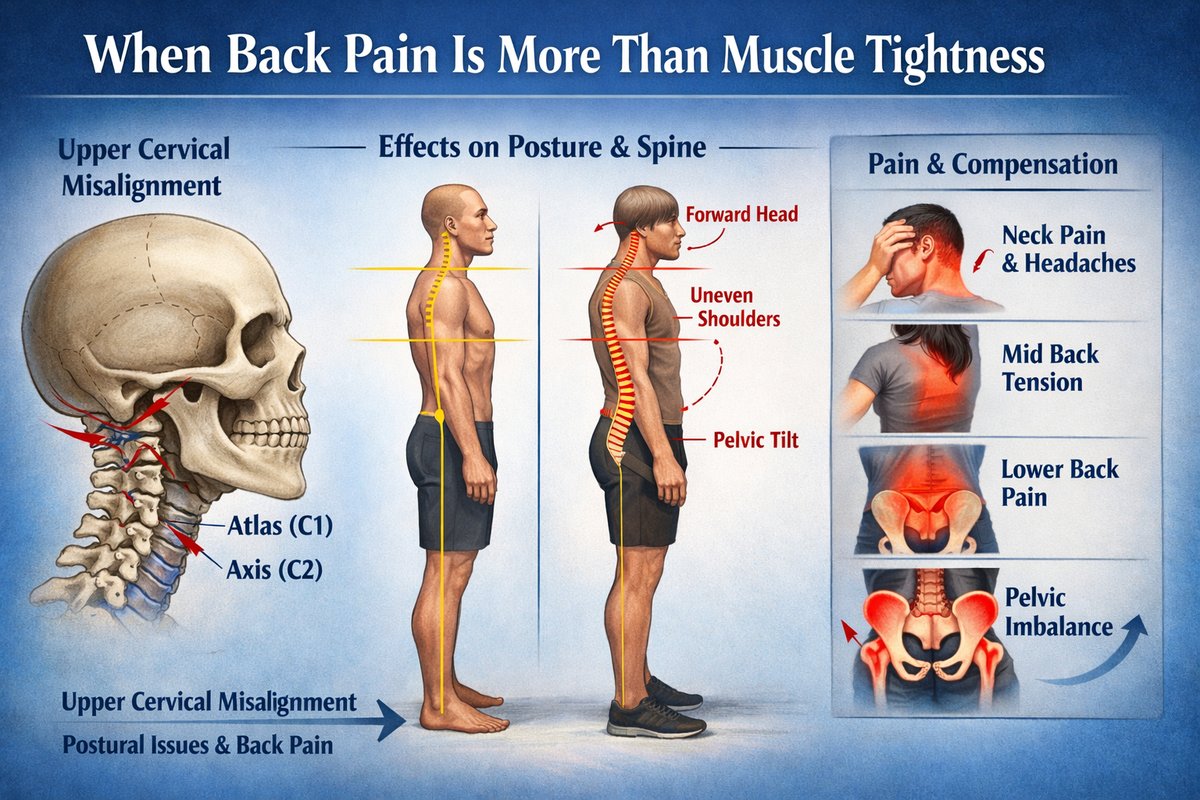
Back pain is often described in simple terms: tight muscles, poor posture, long hours at a desk, or lifting something the wrong way. While muscle tension can absolutely contribute to discomfort, not all back pain begins in the muscles themselves. In some cases, persistent or recurring back pain may reflect deeper structural or neurological influences — including dysfunction at the very top of the spine.
Understanding when back pain is more than muscle tightness requires looking at the body as an integrated system. One region that is frequently overlooked in this conversation is the upper cervical spine.
The Common Assumption: It’s Just Tight Muscles
Muscle tightness is a familiar explanation. When muscles are overworked, stressed, or compensating for poor mechanics, they can become hypertonic and painful. This often responds to stretching, massage, strengthening, or time.
However, warning signs that something more may be involved include:
- Pain that keeps returning despite stretching or therapy
- Discomfort that shifts locations
- Associated symptoms like headaches, neck stiffness, dizziness, or radiating pain
- A sense that posture correction alone does not resolve the issue
- When symptoms persist beyond muscular care, it becomes necessary to examine alignment, joint motion, and neurological input.
The Spine Works as One Unit
The spine is not a series of isolated segments. It is a kinetic and neurological chain. When one area loses proper alignment or motion, other regions adapt. Over time, those adaptations can create strain patterns that feel muscular but originate elsewhere.
The upper cervical spine — the top two vertebrae known as the atlas (C1) and axis (C2) — plays a central role in this system. These vertebrae support the skull and protect the lower brainstem. Because of their proximity to critical neurological structures, even subtle misalignments can influence global muscle tone and postural control.
When this area is not functioning optimally, the body may compensate all the way down the spine.
How Upper Cervical Dysfunction Can Influence Back Pain
Upper cervical chiropractic focuses specifically on precise alignment of the atlas and axis. The goal is not forceful manipulation, but careful correction of small misalignments that may alter neurological signaling and biomechanical balance.
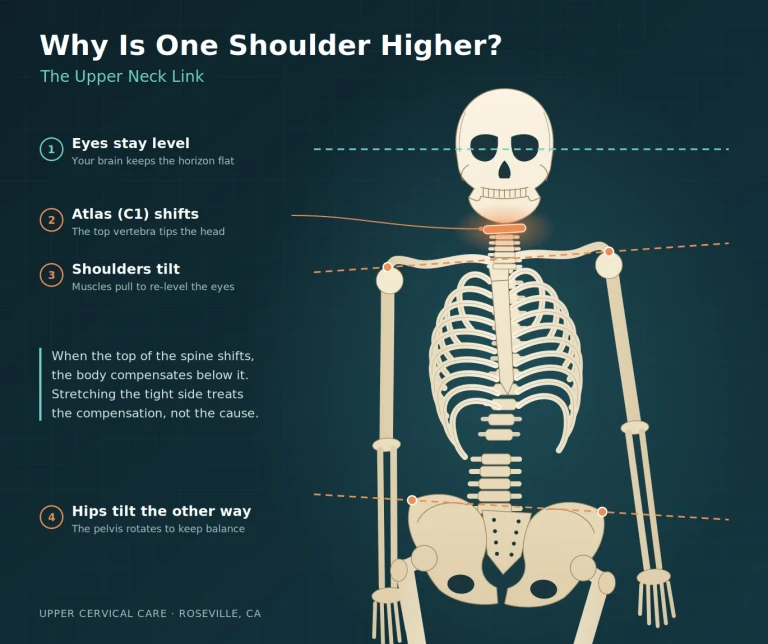
When the head is not positioned correctly over the spine, the body must adapt to keep the eyes level and maintain equilibrium. This can lead to:
- Shoulder asymmetry
- Uneven weight distribution
- Pelvic rotation
- Leg length discrepancies (functional, not structural)
- Increased stress through the thoracic and lumbar spine
Over time, the lower back may bear excessive mechanical load. The muscles tighten to stabilize instability created higher up. The pain feels muscular, but the root influence may be structural and neurological.
The Brainstem Connection
The upper cervical region surrounds the brainstem, which helps regulate muscle tone, balance, and autonomic function. If irritation or mechanical stress affects this area, global muscle guarding patterns can develop.
Instead of one isolated tight muscle, the body may adopt a protective pattern.
Patients sometimes report:
- Chronic mid-back tightness
- Low back stiffness that fluctuates
- Muscle spasms without clear injury
- Tension that returns shortly after massage or therapy
These patterns can reflect altered neuromuscular control rather than isolated muscular dysfunction.
Compensation Patterns: A Cascade Effect
When one segment loses optimal alignment, the body compensates. For example:
- A slight upper cervical misalignment shifts head position.
- The shoulders adapt to keep vision level.
- The thoracic spine rotates to accommodate the shoulder change.
- The lumbar spine adjusts to maintain upright posture.
- The pelvis shifts, affecting hip mechanics.
The lower back muscles tighten in response to this ongoing compensation. Over months or years, this may evolve into chronic pain.
Treating only the lower back without assessing the full chain may provide temporary relief but fail to address the underlying driver.
When to Consider an Upper Cervical Evaluation
Back pain that may warrant a broader evaluation often includes:
- Recurring episodes with no clear cause
- History of whiplash, concussion, or head injury
- Chronic headaches accompanying back pain
- Noticeable postural imbalance
- Pain that improves briefly but does not hold
Upper cervical chiropractic uses imaging and precise analysis to determine whether misalignment is present. Adjustments are typically gentle and specific, designed to restore alignment rather than create repeated forceful corrections.
The Difference Between Symptom Relief and Structural Stability
Muscle therapies focus on soft tissue. They can reduce tension and improve circulation. However, if the body continues to compensate for structural imbalance, muscles may tighten again.
Upper cervical care aims to stabilize the top of the spine. When alignment improves, the body often redistributes load more evenly. This can reduce the need for compensatory muscle guarding.
Patients sometimes report improvements not only in back pain, but also in:
- Neck mobility
- Headache frequency
- Postural endurance
- Overall sense of balance
While not every case of back pain originates in the upper cervical region, overlooking this area can leave an important variable unaddressed.
Evidence-Informed Perspective
Research in spinal biomechanics demonstrates that head position significantly influences spinal loading patterns. Forward head posture increases stress on the cervical and thoracic spine, which in turn affects lumbar mechanics.
Upper cervical chiropractic is based on the premise that correcting atlas and axis misalignment can normalize head position and improve biomechanical efficiency. By restoring structural balance at the top, downstream strain may decrease.
This does not replace strengthening, mobility work, or lifestyle changes. Instead, it complements them by addressing alignment first.
A Whole-Spine Approach
Back pain should be evaluated with questions such as:

- Is this purely muscular, or is there a structural driver?
- Are compensations occurring above or below the painful area?
- Has the upper cervical region been assessed?
A comprehensive approach may include:
- Postural analysis
- Neurological evaluation
- Imaging when appropriate
- Functional movement assessment
Upper cervical chiropractic fits within this whole-body framework. It focuses on precision rather than force and on long-term stability rather than short-term symptom chasing.
Frequently Asked Questions
1. Can tight muscles alone cause back pain?
Yes. Overuse, poor ergonomics, and stress can create muscular pain. However, persistent or recurrent pain may signal structural or neurological factors.
2. How does the neck affect the lower back?
The head’s position influences spinal alignment. Misalignment in the upper cervical spine can alter posture and load distribution through the entire spine.
3. Are upper cervical adjustments forceful?
Most upper cervical techniques are gentle and highly specific. They differ from general spinal manipulation in both force and focus.
4. Will correcting the upper cervical spine cure all back pain?
No single intervention addresses every case. Upper cervical care is one component of a comprehensive evaluation when structural imbalance is suspected.
Final Perspective
When back pain continues despite stretching, strengthening, and massage, it may be time to look beyond the muscles. The body operates as an interconnected system, and subtle misalignments at the top of the spine can influence mechanics throughout the back.
Understanding the potential relationship between upper cervical alignment and lower spinal stress expands the clinical conversation. Instead of asking only where it hurts, the more productive question becomes: where did the imbalance begin?
Back pain is sometimes more than muscle tightness. In certain cases, it reflects a deeper structural and neurological pattern — one that starts at the very top of the spine and travels downward.
If you would like to learn more about this philosophy or explore whether it applies to your situation, you are invited to visit PRC Pierce Ringstad Chiropractic and begin that conversation.
Leave a comment