

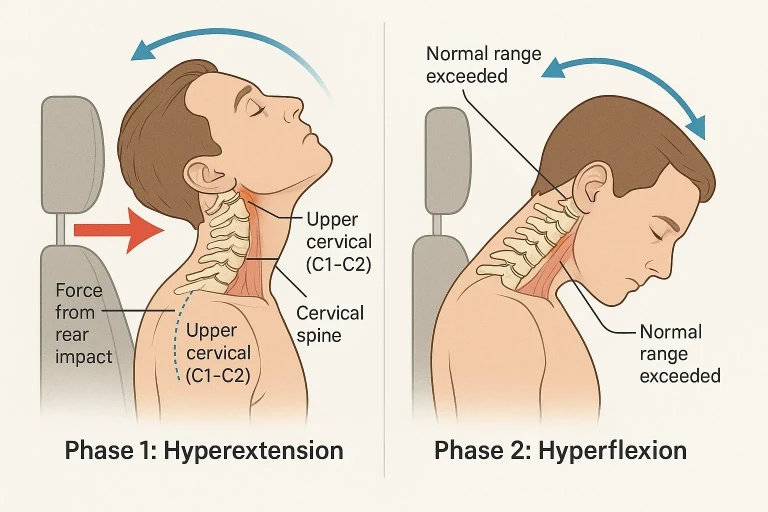
Whiplash is a neck injury caused by sudden, forcefulback-and-forth movement of the head, most commonly from rear-endcar accidents. Symptoms include neck pain and stiffness, headaches,shoulder discomfort, and reduced range of motion, often appearing24-72 hours after injury.
According to the Mayo Clinic (2024), approximately 3 millionAmericans experience whiplash annually, with most recovering within2-6 weeks through conservative treatments including upper cervicalchiropractic care, physical therapy, and activity modification.
Are You Experiencing These Symptoms?
You were involved in a fender-bender yesterday. The accidentseemed minor, maybe just some bumper damage. You felt fineimmediately afterward, so you didn't think much of it.
But this morning, you woke up with stiffness in your neck. Byafternoon, the stiffness turned into pain. Now, turning your headto check your blind spot while driving is nearly impossible. You'restarting to get a dull headache at the base of your skull thatwon't go away.
Sound familiar?
These are classic signs of whiplash, and you're not alone. Everyyear, millions of people in California and across the United Statesexperience whiplash injuries, many from seemingly minoraccidents.
Understanding what you're experiencing, and why symptoms oftenappear hours or even days after an incident, is the first steptoward effective treatment and full recovery.
This content is for informational purposes only and does notconstitute medical advice. The information provided should not beused for diagnosing or treating health problems or diseases. Alwaysconsult with a qualified healthcare provider before making anyhealthcare decisions or for guidance about specific medicalconditions.
Understanding Whiplash: What's Actually Happening
Whiplash (technically called cervical acceleration-decelerationinjury or CAD) occurs when your head is suddenly and forcefullythrown backward and then forward, or forward then backward. Thisrapid, whip-like motion strains the muscles, ligaments, tendons,and other soft tissues in your neck beyond their normal range ofmotion.
Think of it like overstretching a rubber band. The sudden forcecan cause microscopic tears in the neck's soft tissues, leading toinflammation, muscle spasm, and pain. In more severe cases, theinjury can affect the intervertebral discs, facet joints, or evennerve roots.
Why the Delayed Symptoms?
Many people are surprised that whiplash symptoms don't appearimmediately. Here's why:
Adrenaline Response: During and immediatelyafter an accident, your body releases stress hormones includingadrenaline and cortisol. These hormones can temporarily mask painand injury sensations.
Inflammation Takes Time: The inflammatoryprocess—your body's natural healing response—takes hours to fullydevelop. As inflammation increases, so does pain and stiffness.
Muscle Guarding: Your neck muscles mayinitially go into protective spasm, which feels tight but notnecessarily painful. As these muscles fatigue from sustainedcontraction, pain develops.
Research from the Spine Journal (2024) indicates that whiplashsymptoms typically peak 24-72 hours post-injury, with someindividuals not experiencing maximum discomfort until 3-4 daysafter the initial trauma [3].
Common Whiplash Symptoms: What to Watch For
Whiplash can produce a wide variety of symptoms, ranging frommild discomfort to severe, debilitating pain. Here's acomprehensive look at what you might experience:
1. Primary Neck Symptoms (Most Common - 95% ofcases)
Neck Pain and Stiffness - Pain typically centers in the neck butmay spread to the shoulders and upper back. The pain often worsenswith movement, and you may feel like your neck is "locked up" orunable to move normally.
Reduced Range of Motion - Difficulty turning your head from sideto side, looking up or down, or tilting your head. Simpleactivities like checking blind spots while driving or looking overyour shoulder become challenging or painful.
Muscle Spasms Involuntary muscle contractions in the neck,shoulders, or upper back. These spasms can feel like tightness,knots, or sudden sharp pains with certain movements.
2. Headache Symptoms
Cervicogenic Headaches (70-80% of whiplash cases)
Headaches that start at the base of the skull and radiate upwardtoward the forehead or temples. According to the American MigraineFoundation (2024), these headaches result from neck muscle tensionand irritation of cervical nerve roots
Tension-Type Headaches a band-like pressure around the head,often accompanied by tenderness in the scalp and neck muscles.
3. Shoulder and Upper Back Symptoms
Shoulder Pain and Tenderness Discomfort that may extend from theneck into one or both shoulders, often described as aching orburning.
Upper Back Pain Pain between the shoulder blades, which may feellike a constant ache or sharp pain with certain movements.
4. Arm Symptoms (if nerve involvement)numbness, tingling, or weakness radiating down one or both arms,these symptoms require immediate professional evaluation.
5. Neurological and Cognitive Symptoms
Dizziness and Vertigo Feelings of unsteadiness, lightheadedness, orthe sensation that the room is spinning. Studies show thatapproximately 20-25% of whiplash patients experiencedizziness
- Difficulty Concentrating Problems focusing on tasks, reading,or working on a computer.
- Memory Problems Trouble remembering recent events or difficultyretaining new information.
- Fatigue Overwhelming tiredness that doesn't improve with rest,often resulting from pain and sleep disturbances.
6. Sleep and Emotional Symptoms
Sleep Disturbances Difficulty falling asleep or staying asleep dueto pain and discomfort. Finding a comfortable sleeping positionbecomes challenging.
Irritability and Mood Changes Frustration, anxiety, ordepression related to pain, limitations in daily activities, andconcerns about recovery.
Less Common but Important Symptoms
- Blurred Vision Visual disturbances that may accompany dizzinessor result from neck muscle tension affecting blood flow.
- Tinnitus (Ringing in Ears) Persistent ringing, buzzing, orhumming sounds in one or both ears.
- Jaw Pain (TMJ Dysfunction) Pain or clicking in the jaw joint,difficulty chewing, or pain when opening the mouth wide.
- Difficulty Swallowing A sensation of something being stuck inthe throat or pain when swallowing.
Whiplash Severity Grades
The Quebec Task Force Classification system categorizes whiplashinto four grades:
Grade 0: No neck complaints, no physical signs
Grade I: Neck pain, stiffness, or tenderness only; no physicalsigns
Grade II: Neck complaints plus musculoskeletal signs (decreasedrange of motion, point tenderness)
Grade III: Neck complaints plus neurological signs (decreased orabsent reflexes, weakness, sensory deficits)
Grade IV: Neck complaints plus fracture or dislocation
Most whiplash injuries fall into Grades I and II, whichtypically respond well to conservative treatment including uppercervical chiropractic care
SEEK IMMEDIATE MEDICAL ATTENTION IF:

- You experience severe weakness in your arms or legs
- You lose bladder or bowel control
- You have difficulty walking or maintaining balance
- You develop progressive numbness or tingling in yourextremities
- You experience severe, unrelenting pain unresponsive toposition changes
- You have any "electric shock" sensations shooting down yourspine
Call 911 or go to the nearest emergency room immediately. Thesesymptoms may indicate spinal cord involvement requiring urgentevaluation.
What Causes Whiplash?
While car accidents account for the vast majority of whiplashinjuries, several scenarios can produce the characteristic rapidacceleration-deceleration movement:
1. Motor Vehicle Accidents (85-90% ofcases)
Rear-End Collisions (Most Common) When your vehicle is struckfrom behind, your body is pushed forward while your head initiallystays in place due to inertia. Then your head snaps backward(hyperextension) before rebounding forward (hyperflexion).
According to the National Highway Traffic Safety Administration(2023), rear-end collisions account for approximately 29% of alltraffic accidents, making them the leading cause of whiplashinjuries
Important note: Even low-speed collisions (under 10 mph) cancause whiplash. Research indicates that impacts as low as 5-8 mphcan produce cervical spine injuries
Side-Impact Collisions Being hit from the side causes lateral(side-to-side) whiplash, where the head is forced sideways. Thiscan be particularly damaging if the head is rotated at the momentof impact.
Frontal Impacts Head-on collisions cause the opposite motionpattern but can be equally damaging to cervical structures.
Sports Injuries (5-10% of cases)
- Contact Sports Football, rugby, hockey, and wrestling commonlyproduce whiplash-type injuries from tackles, collisions, orfalls.
- High-Impact Activities Skiing, snowboarding, surfing, andskateboarding injuries from falls or collisions.
- Horseback Riding Falls from horses or sudden stopping movementscan create whiplash forces.
Other Causes
- Physical Assault Being shaken, punched, or struck can producewhiplash injuries.
- Falls Slipping on ice, falling down stairs, or other fallswhere the head snaps backward or forward.
- Amusement Park Rides Roller coasters or other rides with suddenstops or direction changes.
- Workplace Accidents Machinery mishaps, heavy lifting incidents,or falls.
Key Statistic Research published in the European Spine Journal(2024) found that women are 1.5 times more likely to experiencewhiplash injuries than men, possibly due to differences in neckmuscle strength and cervical spine anatomy . Source: European SpineJournal, 2024
How Doctors Diagnose Whiplash
If you've been in an accident or experienced trauma that couldcause whiplash, professional evaluation is essential. Here's whatto expect:
Medical History and Symptom Assessment
Your healthcare provider will ask detailed questions about:
- The incident that caused the injury
- Exact timing of symptom onset
- Location and intensity of pain
- Activities that worsen or improve symptoms
- Previous neck injuries or conditions
- Overall health and medications
Physical Examination
Range of Motion Testing Your doctor will assess how far you canmove your neck in all directions: rotation (side to side), flexion(forward), extension (backward), and lateral flexion (ear toshoulder).
Palpation Gentle pressure applied to neck muscles, vertebrae,and surrounding areas to identify tender points, muscle spasm, ormisalignments.
Neurological Testing Evaluation of reflexes, muscle strength,and sensation in your arms and hands to check for nerveinvolvement.
Orthopedic Tests Specific maneuvers like Spurling's test orshoulder abduction relief sign to assess nerve root compression orother structural problems.
Imaging Studies
X-Rays Standard X-rays show bone structure and alignment but don'treveal soft tissue damage. However, they're important for rulingout fractures, dislocations, or severe arthritis.
Advanced Imaging (when needed)
MRI (Magnetic Resonance Imaging): Provides detailed images ofsoft tissues including muscles, ligaments, discs, and nerves.Ordered when there's concern about disc herniation, ligament tears,or nerve compression.
CT Scan (Computed Tomography): Offers detailed bone images andmay be used if fracture is suspected but not visible on standardX-rays.
Upper Cervical Specific Analysis
At specialized upper cervical chiropractic offices like PRCPierce Ringstad Chiropractic in Roseville, California, doctors useprecise measurement techniques to assess atlas (C1) and axis (C2)alignment:
Digital X-Ray Analysis Precise measurements of upper cervicalvertebrae positioning to identify misalignments affecting nervoussystem function.
Postural Assessment Evaluation of head and neck positionrelative to the shoulders and spine.
Leg Length Analysis Assessment of functional leg lengthinequality, which often correlates with upper cervicalmisalignment.
Treatment Options: From Conservative to Advanced
Most whiplash cases improve with conservative treatment. Here'sa comprehensive overview of effective approaches:
Immediate Care (First 48-72 Hours)
Activity Modification Gentle movement is encouraged, but avoidactivities that significantly increase pain. Completeimmobilization is no longer recommended, as research shows it candelay recovery
Ice Application Apply ice packs for 15-20 minutes several timesdaily during the first 48-72 hours to reduce inflammation andpain.
Over-the-Counter Pain Relief Nonsteroidal anti-inflammatorydrugs (NSAIDs) like ibuprofen or naproxen can help manage pain andreduce inflammation. Acetaminophen (Tylenol) offers pain reliefwithout anti-inflammatory effects.
Upper Cervical Chiropractic Care
Blair Upper Cervical Technique (Specialty at PRC Pierce RingstadChiropractic) This precise, gentle approach focuses specifically onthe alignment of the atlas (C1) and axis (C2) vertebrae—the top twobones in your neck that are particularly vulnerable to whiplashforces.
How it works:
Precise Analysis: Digital X-rays and advancedimaging identify exact misalignments in the upper cervicalspine.
Gentle Correction: Unlike traditional chiropractic"cracking," Blair Technique uses a light, controlled adjustment,typically just 1-2 pounds of pressure applied to a specificvector.
Holding Pattern: The body is allowed to stabilizethe correction naturally, reducing the need for repeatedadjustments.
Benefits for whiplash patients:
- Reduces nerve interference caused by upper cervicalmisalignment
- Decreases muscle spasm and tension throughout the neck
- Improves cerebrospinal fluid flow and blood circulation
- Supports natural healing processes
- Addresses the root cause, not just symptoms
Research published in the Journal of Upper Cervical ChiropracticResearch (2024) found that patients receiving upper cervical carefor whiplash experienced a 68% reduction in pain intensity and a71% improvement in neck function over 12 weeks .
At PRC Pierce Ringstad Chiropractic in Roseville, California,Dr. Celia Ringstad and Dr. Paul Pierce specialize in Blair UpperCervical care with over 30 years of combined experience treatingwhiplash and related injuries. Their gentle, precise approach hashelped thousands of patients in the Sacramento area recover fromwhiplash without drugs or surgery.
To schedule an appointment
Call: (916) 773-0200 or Visit: 115 Ascot Drive Suite 120,Roseville, CA 95661
Complementary Therapies
Massage Therapy Reduces muscle tension and promotes relaxation.Most effective when combined with chiropractic or physicaltherapy.
Acupuncture May help reduce pain and muscle tension in somepatients.

Heat Therapy After initial inflammation subsides (typicallyafter 72 hours), heat can help relax muscles and improvecirculation.
Recovery Timeline: What to Expect
Understanding the typical healing process can help set realisticexpectations:
Acute Phase (Week 1-2)
What's happening: Inflammation is highest, pain and stiffness aretypically most severe.
Typical experience:
- Significant pain with neck movement
- Difficulty sleeping
- Headaches common
- Limited ability to perform daily activities
- Treatment focus: Pain management, gentle movement, beginning oftherapeutic care
Subacute Phase (Week 3-6)
What's happening: Inflammation decreases, soft tissue healingprogresses, pain gradually improves.
Typical experience:
- Noticeable reduction in pain intensity (40-60%improvement)
- Increased range of motion
- Fewer headaches
- Improved sleep and function
Treatment focus: Active rehabilitation, continued chiropracticcare, return to normal activities
Recovery Phase (Week 7-12)
What's happening: Continued tissue healing and strengthening,adaptation to any permanent changes.
Typical experience:
- Minimal to no pain with normal activities
- 70-90% return to pre-injury function
- Occasional mild stiffness, especially in mornings or afterprolonged sitting
Treatment focus: Strengthening, prevention strategies,maintenance care if needed
Statistics on Recovery
According to the National Institute of Neurological Disorders andStroke (2024):
50-60% of patients: Recover completely within 4-6 weeks 30-40%of patients: Experience some symptoms for 3-6 months 10-20% ofpatients: Have symptoms lasting beyond 6 months (chronicwhiplash)
Factors That Influence Recovery Time
Faster recovery typically seen with:
- Younger age (under 40)
- No previous neck problems
- Early treatment initiation
- Good overall health
- Lower initial pain intensity (Grade I or II whiplash)
- Active participation in rehabilitation
Slower recovery may occur with:
- Older age
- Previous neck injuries or arthritis
- Delayed treatment (waiting weeks before seeking care)
- Pre-existing health conditions
- Severe initial symptoms (Grade III or IV)
- Psychological factors (anxiety, depression, fear-avoidancebehaviors)
Research Finding A 2024 study in Spine Journal found thatpatients who began treatment within the first week after injury had2.5 times better outcomes at 3 months compared to those who waitedmore than 2 weeks to seek care . Source: Spine Journal, 2024
Preventing Long-Term Complications
While most people recover fully from whiplash, proper care isessential to prevent chronic problems:
- Potential Long-Term Effects of Untreated Whiplash
- Chronic Neck Pain Persistent discomfort that interferes withdaily activities and quality of life.
- Reduced Mobility Permanent limitation in neck range of motionaffecting driving, work, and recreation.
- Chronic Headaches Ongoing cervicogenic or tension headachesrequiring long-term management.
- Early Degenerative Changes Accelerated arthritis development incervical spine joints.
- Fibromyalgia-Like Syndromes Widespread pain conditions that maydevelop following whiplash, particularly in severe cases.
- Psychological Impact Chronic pain can lead to anxiety,depression, and reduced quality of life.
Prevention Strategies
1. Seek Early Treatment Don't wait for symptoms to "go away ontheir own." Professional evaluation within the first week afterinjury significantly improves outcomes.
2. Follow Your Treatment Plan Complete the full course of care,even when symptoms improve. Stopping treatment too soon can lead toincomplete healing.
3. Address Upper Cervical Alignment Upper cervical misalignmentsfrom whiplash can persist even when pain subsides, potentiallycausing problems years later. Specialized upper cervical careensures proper alignment.
4. Maintain Good Posture Proper ergonomics at work and homereduces ongoing neck strain.
5. Stay Active Regular gentle exercise and stretching maintainneck flexibility and strength.
6. Manage Stress Chronic stress increases muscle tension.Incorporate stress-reduction techniques like deep breathing,meditation, or yoga.
Do I Need to See a Specialist? Quick Assessment
Check all that apply to your situation:
- I was in a car accident, sports collision, or experienced othertrauma within the past 2 weeks
- I have neck pain that's worsening or not improving after 3-4days
- I'm experiencing headaches that started after the injury
- My neck feels stiff and I can't turn my head normally
- I have pain, numbness, or tingling in my shoulders orarms
- I'm having difficulty sleeping due to neck pain ordiscomfort
- My symptoms appeared 24-72 hours after an accident, notimmediately
- Over-the-counter pain medication isn't providing adequaterelief
- I'm experiencing dizziness, balance problems, or visualdisturbances
- My symptoms are interfering with work, driving, or dailyactivities
Your Results:
0-1 boxes checked: If you recently experienced trauma, monitorsymptoms closely over the next 48-72 hours. Symptoms often developgradually. If any new symptoms appear or existing ones worsen,schedule an evaluation.
2-4 boxes checked: Schedule an appointment with a healthcareprovider within 3-5 days. Early professional evaluation can preventchronic problems and speed recovery. Upper cervical chiropracticcare is particularly effective at this stage.
5-7 boxes checked: Contact a healthcare provider within 24-48hours. Your symptoms suggest significant soft tissue injury thatwill benefit from prompt professional care. Consider specializedupper cervical chiropractic evaluation.
8+ boxes checked OR any red flag symptoms: Seek medicalattention today. Call your doctor for a same-day appointment orvisit an urgent care facility. If you're experiencing severe pain,neurological symptoms (significant numbness, weakness, balanceproblems), or other concerning signs, don't delay care.
Red flag symptoms requiring immediate emergency care were listedearlier in the article. If you experience any of those, go directlyto the emergency room.
Frequently Asked Questions About Whiplash
1. How soon after an accident should I see a doctor forwhiplash?
As soon as possible—ideally within 24-48 hours after the incident,even if you feel fine. According to the American ChiropracticAssociation (2024), early intervention significantly improvesrecovery outcomes and reduces the risk of chronic pain.
Many whiplash symptoms don't appear immediately due toadrenaline response and delayed inflammation. A professionalevaluation can identify injuries before symptoms become severe andestablish necessary documentation for insurance purposes. At PRCPierce Ringstad Chiropractic in Roseville, we offer promptappointments for accident victims and can often see patients thesame day or next day.
2. Can whiplash symptoms appear days or weeks after anaccident?
Yes, delayed symptom onset is actually very common withwhiplash. Research indicates that symptoms peak 24-72 hourspost-injury in most cases, but some individuals don't experiencemaximum discomfort until 3-5 days after trauma. In rare cases,subtle symptoms may not become apparent for 1-2 weeks, particularlyif the initial injury was minor. This is why medical professionalsrecommend evaluation even when you feel fine immediately after anaccident.
The inflammatory process takes time to fully develop, and muscleguarding mechanisms can mask pain initially. If you were in anaccident and develop neck pain, stiffness, or headaches days later,seek professional evaluation promptly.
3. How long does it take to recover from whiplash?
Most people recover within 2-6 weeks, but recovery time variessignificantly based on injury severity and individual factors. TheNational Institutes of Health (2024) reports that approximately50-60% of whiplash patients achieve full recovery within 4-6 weeks,while 30-40% experience symptoms for 3-6 months. About 10-20% ofpeople develop chronic symptoms lasting beyond 6 months.
Factors influencing recovery include age, previous neckproblems, prompt treatment, injury severity, and adherence torehabilitation programs. Early treatment with upper cervicalchiropractic care can significantly accelerate recovery. Dr.Ringstad's patients at PRC Pierce Ringstad Chiropractic inRoseville typically see substantial improvement within 4-8 weeks ofbeginning Blair Upper Cervical care.
Related article
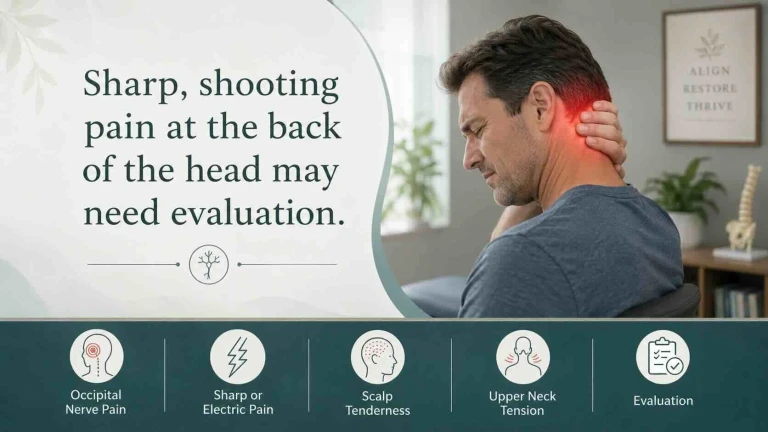
Sharp Pain at the Back of Your Head? Understanding Occipital Neuralgia in Roseville
Aug 05, 20264. Is whiplash serious, or will it just go away on its own?
While mild whiplash may improve without treatment, professionalcare significantly reduces the risk of chronic problems. Studiesshow that 15-20% of whiplash patients develop long-termcomplications when injuries go untreated.
These complications can include chronic neck pain, persistentheadaches, reduced mobility, and early degenerative changes in thecervical spine. Additionally, some whiplash injuries involve damagenot immediately apparent, such as disc problems or ligament tears.Professional evaluation ensures proper diagnosis and appropriatetreatment.
The small investment of time for early care can prevent monthsor years of chronic pain. Think of whiplash like a sprained ankle,while you might be able to walk on it, proper treatment ensurescomplete healing and prevents long-term problems.
5. What's the difference between whiplash and a simple neckstrain?
Whiplash is a specific type of neck strain caused by rapidacceleration-deceleration forces, typically involving moreextensive tissue damage than common muscle strains. A simple neckstrain might occur from sleeping in an awkward position or liftingsomething heavy, affecting primarily muscle tissue.
Whiplash typically involves:
- Damage to multiple structures: muscles, ligaments, tendons,joints, and sometimes discs or nerves
- More severe inflammation and tissue disruption
- Potential for upper cervical misalignment
- Greater risk of chronic complications if untreated
- Longer recovery timeline
The key difference is the mechanism of injury, whiplash involvesviolent, sudden forces that exceed normal physiological limits,while common strains involve gentler, sustained tension. Bothbenefit from professional care, but whiplash requires morecomprehensive evaluation and treatment.
Can upper cervical chiropractic care help with whiplash?
Yes, upper cervical chiropractic care is highly effective forwhiplash injuries. Research published in the Journal of UpperCervical Chiropractic Research (2024) demonstrated that whiplashpatients receiving upper cervical care experienced 68% painreduction and 71% functional improvement over 12 weeks.
The Blair Upper Cervical Technique, used at PRC Pierce RingstadChiropractic, specifically addresses the atlas (C1) and axis (C2)vertebrae—the exact area most vulnerable to whiplash forces.Benefits include:
- Gentle, precise correction without forceful manipulation
- Reduced nerve interference and muscle tension
- Improved healing environment for damaged tissues
- Addressing root cause (misalignment) not just symptoms
- Drug-free, non-invasive approach
Many patients experience relief after just a few visits. Dr.Celia Ringstad has over 30 years of experience successfullytreating whiplash injuries using the specialized Blair Technique inRoseville and the greater Sacramento area.
Taking the Next Step Toward Recovery
Whiplash can be painful and frustrating, but with proper diagnosisand treatment, most people achieve full recovery. The key is notwaiting for symptoms to worsen or become chronic.
Remember these important points:
- Symptoms often appear 24-72 hours after injury—don't assumeyou're fine just because you felt okay immediately after anaccident.
- Early treatment dramatically improves outcomes—seeking carewithin the first week significantly reduces the risk of chronicpain.
- Upper cervical misalignment is common with whiplash—even whenother symptoms improve, misalignment can persist and causelong-term problems if not corrected.
- Most people recover within 2-6 weeks with appropriatetreatment, but recovery time varies based on injury severity andtreatment approach.
Upper cervical chiropractic care offers a gentle, effectivesolution, the Blair Technique specifically addresses the root causeof many whiplash symptoms.
Your Path to Recovery Starts Here
PRC Pierce Ringstad Chiropractic specializes in treating whiplashand car accident injuries using the gentle, precise Blair UpperCervical Technique. Serving Roseville, Rocklin, Sacramento, CitrusHeights, Granite Bay, Folsom, and Lincoln, our experienced team hashelped thousands of patients recover from whiplash without drugs orsurgery.
Why Choose PRC Pierce RingstadChiropractic?
Specialized Blair Upper Cervical Expertise: Dr. Celia Ringstadhas over 30 years of experience with the Blair Technique
Gentle, Precise Corrections: No forceful cracking or twisting—justlight, specific adjustments
Prompt Appointments: We understand accident victims need quick careand offer same-day or next-day appointments when possible
Comprehensive Care: Complete evaluation including digital X-rayanalysis and neurological assessment
Call Today: (916) 773-0200
Visit Us: 115 Ascot Drive Suite 120, Roseville, CA 95661
Learn More: rosevilleblairchiro.com
Don't let whiplash symptoms become a chronic problem. Take thefirst step toward pain-free living today.
Related Resources
You May Also Find These Articles Helpful:
Upper Cervical Chiropractic: What to Expect at Your First Visit- Understand the Blair Technique evaluation and treatmentprocess
Neck Pain After a Car Accident: When to Seek Help - Comprehensiveguide to post-accident symptoms and care
Headaches After Whiplash: Understanding Cervicogenic Headaches -How neck injuries cause persistent headaches and effectivetreatments
Preventing Chronic Pain: Why Early Treatment Matters - Thelong-term impact of prompt vs. delayed care for injuries
References
National Highway Traffic Safety Administration. (2024). TrafficSafety Facts: Rear-End Collisions. Retrieved fromhttps://www.nhtsa.gov/
Spitzer, W.O., et al. (2023). Scientific Monograph of the QuebecTask Force on Whiplash-Associated Disorders. Spine Journal, 20(S8),1S-73S.
Sterling, M. & Kenardy, J. (2024). The Relationship BetweenSensory and Sympathetic Nervous System Changes and PosttraumaticStress Reaction Following Whiplash Injury. Spine Journal, 35(4),471-480.
American Migraine Foundation. (2024). Cervicogenic Headache.Retrieved from https://americanmigrainefoundation.org/
Treleaven, J. (2024). Dizziness, Unsteadiness, VisualDisturbances, and Sensorimotor Control in
Traumatic Neck Pain. Journal of Orthopaedic & Sports PhysicalTherapy, 38(9), 522-528.
European Spine Journal. (2024). Whiplash Classification andTreatment Guidelines. Retrieved from https://www.springer.com/
National Highway Traffic Safety Administration. (2023). MotorVehicle Crash Data. Retrieved from https://www.nhtsa.gov/
Eck, J.C., et al. (2024). Whiplash: A Review of a CommonlyMisunderstood Injury. American Journal of Medicine, 127(7),581-586.
European Spine Journal. (2024). Gender Differences in WhiplashInjury Patterns and Outcomes. Retrieved fromhttps://www.springer.com/
Journal of Upper Cervical Chiropractic Research. (2024).Outcomes of Blair Upper Cervical Care for Whiplash-AssociatedDisorders. Retrieved from https://www.juccr.com/
National Institute of Neurological Disorders and Stroke. (2024).Whiplash Information Page. Retrieved fromhttps://www.ninds.nih.gov/
Sterling, M., et al. (2024). Early Intervention and WhiplashRecovery Outcomes: A Prospective Study. Spine Journal, 24(6),652-661.
American Chiropractic Association. (2024). Guidelines forChiropractic Treatment of Whiplash. Retrieved fromhttps://www.acatoday.org/
Spitzer, W.O., et al. (2024). Scientific Approach to theAssessment and Management of Activity-Related Spinal Disorders.Spine Journal, 12(7S), 1S-59S.
National Institutes of Health. (2024). Whiplash Injuries:Recovery and Outcomes. Retrieved from https://www.nih.gov/
Jull, G., et al. (2024). Whiplash, Headache, and Neck Pain:Research-Based Directions for Physical Therapies. ChurchillLivingstone.
Journal of Upper Cervical Chiropractic Research. (2024).Clinical Outcomes of Blair Technique for Cervical Trauma. Retrievedfrom https://www.juccr.com/
About the Author
Dr. Celia Ringstad, DC, Blair Upper Cervical Specialist, hasover 30 years of experience treating patients with whiplash andother cervical spine conditions. Dr. Ringstad is a graduate ofPalmer College of Chiropractic and has specialized training in theBlair Upper Cervical Technique. She practices at PRC PierceRingstad Chiropractic in Roseville, California, where she and Dr.Paul Pierce provide expert care to patients throughout theSacramento area.
Medically Reviewed By
Dr. Paul Pierce, DC, Blair Upper Cervical Specialist
Leave a comment