

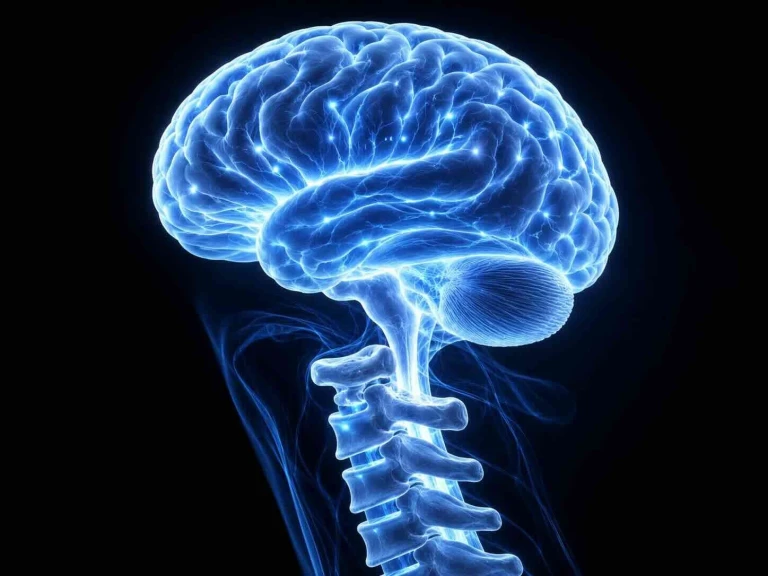
A concussion is supposed to heal. That is what most people are told — rest for a few weeks, avoid screens, take it easy, and you should be back to normal. For a significant number of people, that timeline does not hold.
The headaches persist. The brain fog does not lift. Light sensitivity, mood changes, difficulty concentrating, and a general feeling that something is still wrong linger for months, sometimes years.
That is post-concussion syndrome. And for patients in Roseville and the greater Sacramento region who are living with it, the explanation they have been given — that the brain just needs more time — often stops feeling adequate long before the symptoms do.
At PRC Pierce Ringstad Chiropractic on Ascot Drive, the structural component of post-concussion syndrome is taken seriously in a way that most conventional post-concussion care does not. Specifically, the role of the upper cervical spine — the atlas and axis vertebrae sitting directly beneath the skull — in prolonging and amplifying the symptoms that should have resolved.
What Post-Concussion Syndrome Actually Is
Post-concussion syndrome is diagnosed when concussion symptoms persist beyond the expected recovery window, generally defined as three months following the initial injury. The symptom profile varies but typically includes some combination of persistent headaches, cognitive difficulties, fatigue, sleep disruption, dizziness, irritability, anxiety, and heightened sensitivity to light and sound.
The underlying mechanisms are still being actively researched, but the current understanding points to several converging factors: neuroinflammation, disrupted cerebral blood flow, altered cerebrospinal fluid dynamics, brainstem stress, and dysregulation of the autonomic nervous system.
None of those mechanisms are visible on a standard MRI. Which is why post-concussion patients are so frequently told their imaging is normal while they feel anything but.
What that imaging does not evaluate is the structural state of the upper cervical spine following the impact that caused the concussion.

The Upper Cervical Spine and Concussion
A Connection Most Patients Never Hear About
Every concussion involves a significant force to the head. Whether it is a collision on a soccer field, a car accident on I-80, a fall, or a blow absorbed in a contact sport, the mechanics of that impact do not stop at the skull. The force travels directly into the upper cervical spine — and the atlas, by virtue of its design, is the first structure to absorb and potentially displace from that force.
The atlas has no intervertebral disc above it and no interlocking facet joints to limit its movement. That design gives the head its remarkable range of motion. It also makes the atlas uniquely vulnerable to displacement under sudden impact. A force strong enough to produce a concussion is almost always strong enough to shift the atlas out of its optimal position.
When that displacement goes undetected and uncorrected, the consequences compound the neurological injury from the concussion itself. The displaced atlas places mechanical stress on the brainstem.
It can impair the drainage of cerebrospinal fluid through the craniocervical junction — a pathway increasingly understood to be central to brain health and neurological recovery.
It disrupts the proprioceptive signals the upper cervical spine sends to the brain about head position and spatial orientation, contributing to the dizziness and balance problems that plague many post-concussion patients.
In short, the concussion injures the brain. The atlas displacement stresses the environment the brain needs to heal in. Both need to be addressed for recovery to proceed.
Why Post-Concussion Patients in Roseville Often Stay Stuck

The Sacramento region has no shortage of athletes, active families, and commuters on busy corridors like Highway 65 and I-80. Sports concussions, auto accident head injuries, and workplace falls all produce post-concussion presentations that end up in primary care offices where the structural evaluation is almost never comprehensive enough.
Standard post-concussion protocols focus on cognitive rest, graduated return to activity, and symptom management. They are built around the brain injury itself — which is appropriate — but they rarely include a precision assessment of the upper cervical spine.
Cervical X-rays taken in an emergency setting are calibrated for fracture detection, not for the millimeter-level rotational and translational misalignments that upper cervical care identifies.
So patients in Roseville leave their follow-up appointments with a normal imaging report, a recommendation to be patient, and symptoms that are not improving. The atlas misalignment sitting beneath the skull goes undetected because nobody looked for it with the right tools.
How PRC Pierce Ringstad Chiropractic Evaluates Post-Concussion Patients
The evaluation process at the Ascot Drive office begins with a thorough intake conversation. For post-concussion patients specifically, the history matters enormously — the mechanism of the original injury, the timeline of symptoms, what has improved and what has not, and what previous interventions have been tried.
Objective neurological testing — including paraspinal infrared thermography and postural analysis — provides additional information about how the nervous system is functioning in its current structural state.
A correction is only delivered when the objective findings support it. For post-concussion patients whose nervous systems are already dysregulated, this data-driven restraint is not a formality — it is a clinical necessity.
The correction itself is gentle. No rotation of the neck. No manipulation. The force is low, the contact is precise, and the vector is calculated from the imaging. For patients who are already dealing with light sensitivity, headaches, and neurological fragility, the non-aggressive nature of upper cervical correction is particularly appropriate.
Related article

Upper Cervical Treatment for Post-Concussion Syndrome: A Path to Recovery
Sep 01, 2025What Recovery Can Look Like
Post-concussion syndrome recovery through upper cervical care is rarely linear and rarely fast. The nervous system needs time to recalibrate after both the original concussion and the structural stress of atlas displacement.
What most patients notice first is incremental — slightly better sleep, headaches that are less frequent or less severe, a reduction in the cognitive fog that makes work and conversation feel like wading through water.
For some patients, particularly those whose post-concussion symptoms began immediately after the injury and have never fully remitted, the structural correction produces more significant changes.
Patients who have been struggling for six months, a year, or longer and who have never had their upper cervical spine evaluated are often the ones who respond most meaningfully — because a correctable structural problem has been present and unaddressed the entire time.
If Your Concussion Recovery Stalled, There May Be a Structural Reason
The brain heals. That part of what you were told is true. But it heals within a structural environment — and if that environment includes an uncorrected atlas displacement compressing the brainstem and impairing cerebrospinal fluid flow, the healing process faces obstacles that rest and time alone cannot remove.
Post-concussion syndrome deserves a complete evaluation, not just a neurological one. The upper cervical spine is part of that picture, and for patients in Roseville who have been waiting to feel like themselves again, it may be the part of the picture nobody has looked at yet.
PRC Pierce Ringstad Chiropractic is located at 115 Ascot Dr, Suite 120, Roseville, CA 95661.
Call (916) 773-0200 to schedule a consultation. If your recovery stalled and you have not had your upper cervical spine evaluated, that is where the next conversation starts.
Leave a comment