

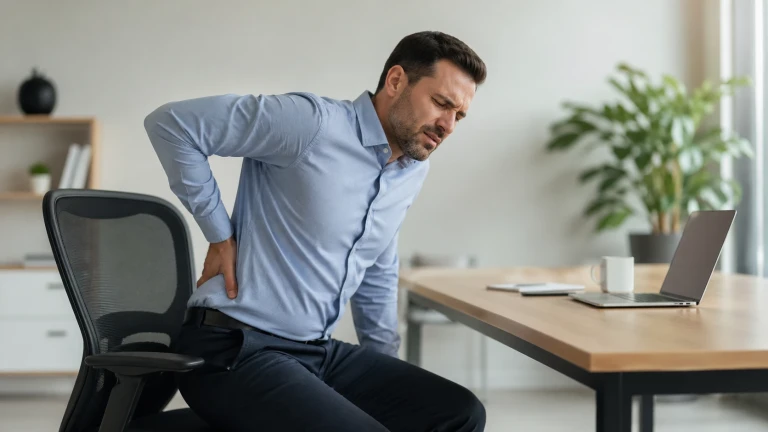
Lower back pain that gets worse after sitting is one of the most common complaints people describe in modern daily life.
A person may feel fine while walking, standing, or moving around, but after sitting at a desk, driving, watching television, or working on a computer, the lower back begins to ache, tighten, burn, or feel locked.
This type of pain can be frustrating because sitting is supposed to be restful. But for the spine, sitting is not always a low-stress position.
In many cases, prolonged sitting places increased pressure on the lower back, reduces movement through the hips and pelvis, and encourages postural patterns that gradually irritate muscles, joints, discs, and nerves.
Lower back pain after sitting may not begin as a major injury. It often develops from repeated stress, poor spinal mechanics, muscle imbalance, and compensation patterns throughout the body.
From an upper cervical chiropractic perspective, the lower back is not evaluated in isolation. The position of the head, neck, spine, pelvis, and nervous system all influence how the body handles posture and pressure.
Why Sitting Can Make Lower Back Pain Worse
Sitting changes the way the spine carries weight. When standing, the hips, legs, core muscles, and spine all help share the load.
When sitting, the pelvis often tilts backward, the lower back loses some of its natural curve, and the body may collapse into a rounded posture.
Over time, this position can increase stress on the lumbar spine, especially when sitting lasts for hours without movement.
The problem is not always sitting itself. The bigger issue is often sitting too long, sitting without support, or sitting in a position that repeatedly loads the same tissues.
Common Reasons Lower Back Pain Gets Worse After Sitting
1. Prolonged Pressure on the Lumbar Spine
The lumbar spine is the lower portion of the spine. It supports much of the body’s weight and helps with bending, lifting, twisting, standing, and walking.
When sitting for long periods, the lumbar spine can become compressed, especially if the person slouches or sits with the pelvis tucked under. This may place extra pressure on spinal joints, discs, and surrounding soft tissues.
People often notice this as a dull ache across the lower back, stiffness when standing up, or a feeling that the back needs time to “loosen up” after sitting.
2. Loss of the Natural Low Back Curve
The lower back has a natural inward curve called lumbar lordosis. This curve helps distribute force through the spine. When sitting in a rounded posture, the curve may flatten.
A flattened lower back position can cause muscles and ligaments to work differently. Some tissues become stretched while others become shortened or compressed. Over time, this can create discomfort that becomes more noticeable after sitting.
This is why lower back support matters. A chair that supports the natural curve of the lower back may reduce unnecessary strain. A rolled towel or small lumbar pillow can sometimes help maintain a more neutral position.
3. Tight Hip Flexors
Sitting keeps the hips bent. When this position is repeated for hours each day, the hip flexor muscles in the front of the hips may become tight or overactive.
Tight hip flexors can pull on the pelvis and influence the position of the lower back. This may create increased tension through the lumbar spine, especially when standing after sitting.
Some people feel pain immediately when they rise from a chair because the hips and pelvis have difficulty transitioning back into an upright position.
4. Weak Core and Glute Muscles
Sitting for long periods can reduce activity in the core and glute muscles. These muscles help stabilize the pelvis and support the lower back.
When the core and glutes are not doing their job well, the lower back often compensates. Instead of the pelvis and hips sharing the load, the lumbar muscles may become overworked. This can contribute to stiffness, fatigue, and pain after sitting.
5. Disc Irritation
Some people experience lower back pain after sitting because of disc-related irritation. The discs between the vertebrae help absorb shock and allow spinal movement. Sitting, especially slouched sitting, can increase pressure through the discs.
Disc-related pain may feel deep, sharp, or achy. It may also travel into the buttock, hip, or leg if nearby nerves become irritated.
Pain that radiates down the leg, causes numbness, tingling, or weakness should be evaluated by a qualified healthcare provider.
6. Joint Stiffness
The joints of the spine are meant to move. When sitting still for long periods, spinal joints may become stiff or irritated. The lower back may then feel stuck when standing or walking again.
This stiffness often improves after a few minutes of movement. That pattern can be an important clue. If pain is worse after sitting but improves with walking, the body may be responding to movement loss and mechanical stress.
The Posture Connection: It Is Not Just the Lower Back Lower back pain after sitting is often described as a lumbar problem, but posture involves the whole spine.
A forward head position, rounded shoulders, collapsed chest, and tilted pelvis can all change how pressure moves through the body.
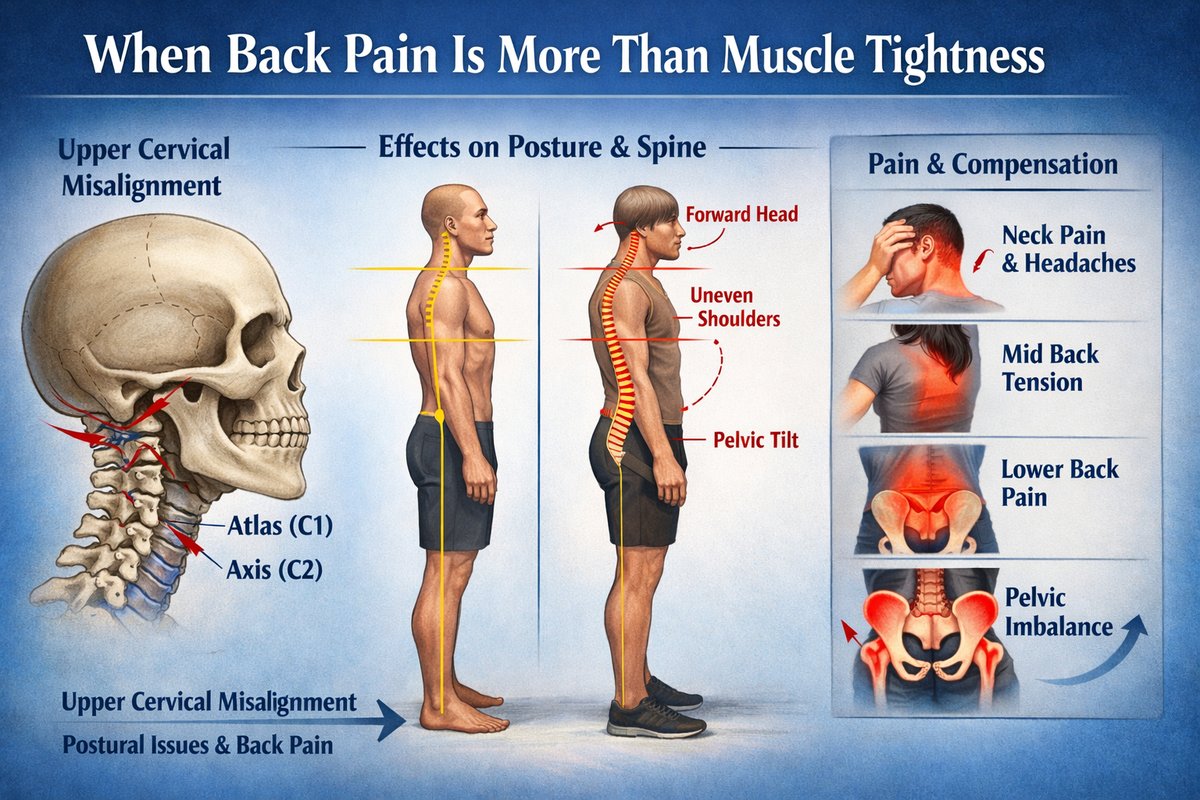
When the head shifts forward, the upper back and neck compensate. When the upper spine becomes less efficient, the lower back may absorb more strain.
This is where upper cervical chiropractic becomes important.
How Upper Cervical Alignment May Relate to Lower Back Pain
Upper cervical chiropractic focuses on the top two bones of the spine: the atlas and axis. These vertebrae sit just beneath the skull and influence head position, posture, balance, and nervous system function.
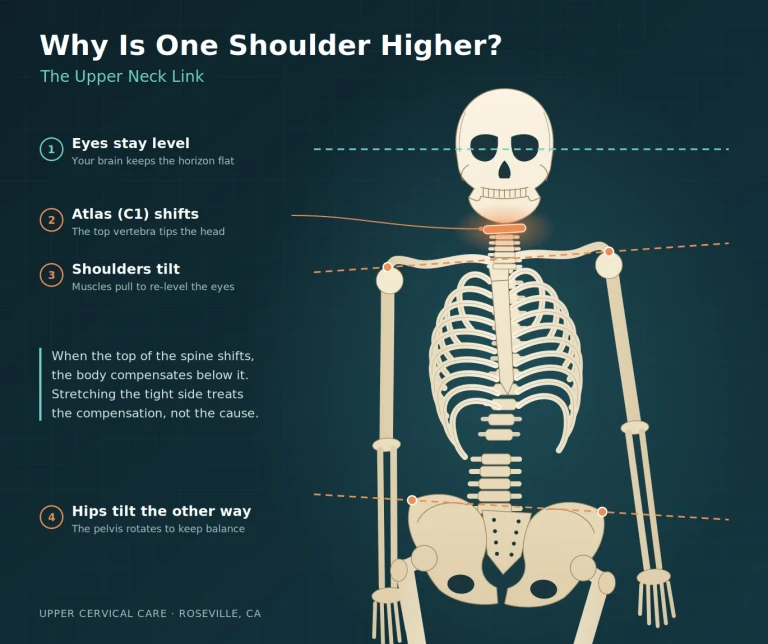
When the head is not balanced well over the spine, the body may compensate below. The shoulders may shift. The rib cage may rotate. The pelvis may adapt. The lower back may tighten to help stabilize the body.
This does not mean every case of lower back pain after sitting begins in the neck. But it does mean the lower back should not always be viewed as a separate problem. The body functions as one connected system.
Upper cervical chiropractic looks at how the top of the spine may influence the rest of the posture chain. A person with recurring lower back pain after sitting may benefit from an evaluation that includes the neck, head position, spinal balance, pelvic compensation, and nervous system stress.
Why Pain Often Feels Worse When Standing Up
Many people say, “My lower back hurts most when I get up from a chair.”
This happens because the spine, hips, and pelvis have been held in one position for too long. When standing, the body must quickly transition from a flexed seated posture into upright extension.
If the hips are tight, the core is not engaged, or the lower back is already irritated, that transition can feel painful.
The first few steps may feel stiff, guarded, or unstable. After walking for a minute, the pain may ease as circulation improves and the joints begin moving again.
Is Sitting-Related Lower Back Pain Serious?
Many cases of lower back pain after sitting are mechanical, meaning the pain changes with posture, movement, or position. However, some symptoms require medical attention.
You should seek medical evaluation if lower back pain is severe, worsening, or associated with numbness, weakness, fever, unexplained weight loss, bowel or bladder changes, or pain after trauma.
What Can Help Lower Back Pain After Sitting?
Small daily changes may help reduce sitting-related lower back pain.
- Change position every 30 minutes.
- Use a chair with lower back support.
- Keep feet flat on the floor.
- Avoid sitting with the pelvis tucked under.
- Place the screen at eye level to reduce forward head posture.
- Walk briefly throughout the day.
- Stretch the hips gently.
- Strengthen the core and glutes.
- Avoid staying in one position for hours.
FAQ
1. Why does my lower back hurt after sitting?
Lower back pain after sitting often happens because prolonged sitting increases pressure on the lumbar spine, reduces hip movement, weakens postural support, and encourages slouching or pelvic imbalance.
2. Why does my back feel stiff when I stand up?
The lower back may feel stiff after sitting because spinal joints, muscles, and hips have been held in one position. Standing requires the body to transition back into upright posture, which can irritate already tight or compressed tissues.
3. Can sitting too long cause lower back pain?
Yes. Sitting too long can contribute to lower back pain, especially when posture is poor or the chair does not support the natural curve of the lower back.
4. Can neck alignment affect lower back pain?
Neck alignment may influence overall posture and spinal compensation. In upper cervical chiropractic, the head and neck are evaluated because their position can affect balance, posture, and stress throughout the spine.
5. When should I see a chiropractor for lower back pain after sitting?
A chiropractic evaluation may be appropriate when lower back pain keeps returning, worsens after sitting, affects movement, or appears connected to posture and spinal imbalance. Severe or neurological symptoms should be medically evaluated promptly.
Visit Our Practice
Lower back pain that gets worse after sitting is often a sign that the body is struggling with posture, spinal balance, muscle support, or compensation patterns. The pain may be felt in the lower back, but the cause may involve the way the entire spine is functioning.
At our practice, upper cervical chiropractic care looks beyond temporary discomfort. The goal is to evaluate how the head, neck, spine, pelvis, and nervous system are working together. By identifying structural imbalance and postural stress, care can be more specific to the individual rather than focused only on the painful area.
If lower back pain becomes worse after sitting, standing from a chair, driving, or working at a desk, a focused upper cervical chiropractic evaluation may help you better understand what your body is trying to communicate.
Visit our practice at:
115 Ascot Dr STE 120 Roseville, CA 95661
Website
Schedule a consultation to learn whether upper cervical chiropractic care is appropriate for your lower back pain, posture concerns, and long-term spinal health.
Leave a comment