

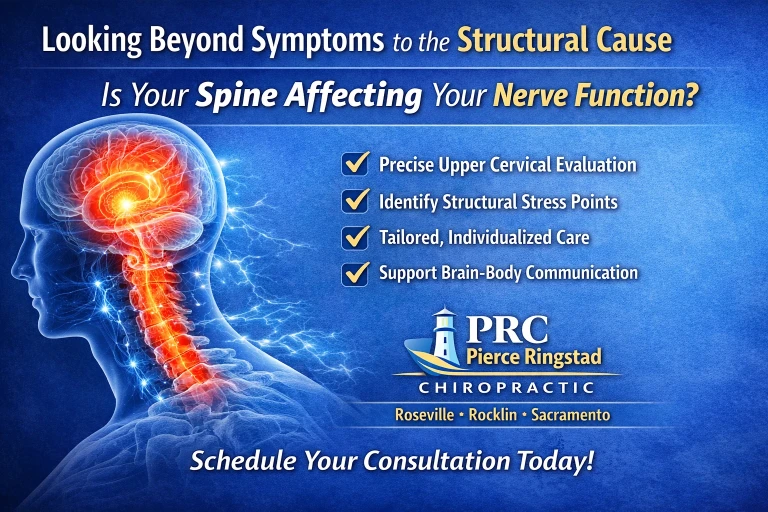
When people hear the word spinal alignment, they often think about posture, back pain, or how straight the body looks from the outside. But alignment is about much more than appearance.
The spine plays a direct role in protecting the nervous system, supporting movement, and helping the brain communicate with the rest of the body. That is why questions about spinal alignment are also questions about function.
In upper cervical chiropractic, this relationship becomes even more important. The upper cervical spine, made up of the atlas and axis vertebrae, sits at the top of the neck and surrounds one of the most neurologically important areas in the body. Even small structural changes here may affect how the body balances, adapts, and responds to stress.
So why does spinal alignment affect nerve function? The answer starts with understanding how closely structure and communication are linked.
The Spine Is More Than a Stack of Bones
The spine is not just a support column. It is a dynamic structure made up of vertebrae, discs, joints, ligaments, muscles, and nerves. Its job is to provide stability while still allowing movement. Most importantly, it protects the spinal cord, which acts as the main information highway between the brain and body.
Every moment of the day, the nervous system is sending and receiving signals. These signals help regulate movement, coordination, balance, muscle tone, reflexes, and many automatic body processes.
If the spine is functioning well, it helps provide a more stable environment for those signals to travel efficiently.
When spinal alignment is altered, the issue is not always dramatic or immediate. The body often compensates at first. But over time, abnormal alignment can change how joints move, how muscles stabilize, and how sensory information is transmitted back to the brain.
How Alignment Influences Nerve Function
Spinal alignment affects nerve function through both mechanical and neurological pathways.
From a mechanical perspective, misalignment may place abnormal stress on joints, muscles, and connective tissue.
When one part of the spine is not moving properly, another area often has to overwork to compensate. This can lead to chronic tension, irritation, and inefficient movement patterns.
From a neurological perspective, the spine is packed with receptors that constantly send information to the brain about position and motion. This system is known as proprioception.
If spinal joints are not aligned or functioning well, the quality of that information may change. The brain may receive distorted input about posture, head position, or movement. That can affect muscle coordination, stability, and how the body adapts to stress.
So while the average person may think of spinal misalignment as only a structural issue, chiropractic often sees it as both a structural and functional concern.
Why the Upper Cervical Spine Matters So Much
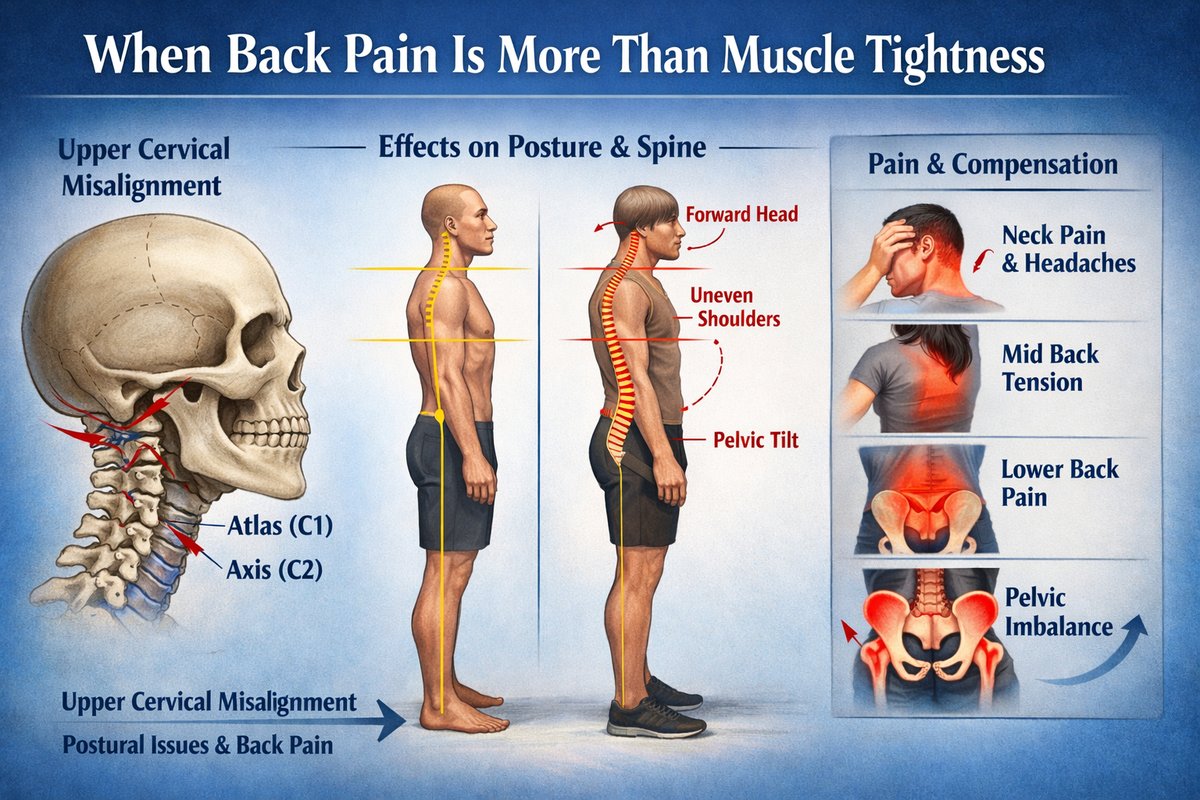
The upper cervical spine deserves special attention because of its location and design. The atlas and axis are different from the rest of the spine. They allow a high degree of head movement and sit directly below the skull, near the brainstem.
The brainstem is a major relay center for nerve communication. It helps regulate essential body processes and coordinates information moving between the brain and body.
Because the upper cervical spine surrounds and supports this region, structural imbalance here may create broader effects than similar issues elsewhere.
This is one reason upper cervical chiropractors focus so carefully on this area. Rather than looking only at general spinal motion, they assess the exact position and relationship of the top vertebrae.
Small misalignments here may contribute to changes in posture, muscle tone, balance, head positioning, and how the nervous system responds to everyday demands.
Common Ways Misalignment May Show Up
A person does not always notice spinal misalignment as sharp pain. Sometimes the signs are more subtle and build over time. They may include:
- Neck tension or stiffness
- Headaches
- Reduced range of motion
- Dizziness or balance issues
- Uneven shoulders or hips
- Muscle tightness
- Recurrent postural strain
A feeling that the body is always compensating
In upper cervical chiropractic, these patterns are often viewed as clues. The body may be adapting to a structural imbalance that affects how it organizes movement and maintains stability.
The Role of Compensation
The body is remarkably good at adapting. When one joint or region is not functioning well, other areas step in to help. This is useful in the short term, but it often comes at a cost.
For example, if the upper cervical spine is misaligned, the head may no longer sit in ideal balance over the body. That can lead to compensations down the spine, through the shoulders, and even into the pelvis.
Muscles may tighten to hold posture together. Certain joints may become overloaded while others lose normal motion.
This compensation pattern is one reason people may feel symptoms far from the original problem. A small upper cervical issue may not stay local. It can influence the body’s mechanics as a whole.

What Upper Cervical Chiropractic Focuses On
Upper cervical chiropractic is different from generalized spinal care because it concentrates on precision. The goal is not simply to create movement.
The goal is to assess whether the top of the neck is out of alignment and, if so, make a highly specific correction.
This matters because the upper cervical region is small, delicate, and neurologically significant. Force is not the defining feature of this approach. Specificity is.
By restoring better alignment, upper cervical chiropractic aims to reduce abnormal stress, improve structural balance, and support a more efficient environment for nervous system communication.
It is not about forcing the body to heal. It is about reducing interference so the body can function with fewer obstacles.
Can Better Alignment Improve Overall Function?
Spinal alignment is not the only factor in health, but it is an important one. If the spine is under chronic stress, the body may spend more energy compensating and protecting itself.
If that stress is reduced, posture may improve, movement may become more efficient, and muscular tension may decrease.
In that sense, better alignment may support better function.
This is especially relevant for people who feel like they are managing symptoms without fully addressing the structural component behind them.
A careful upper cervical evaluation may reveal patterns that have been missed when care focused only on the site of pain.
Support Better Function From the Top Down
When spinal alignment is off, the effects are not always limited to stiffness or localized discomfort.
Because the spine helps protect the central nervous system, structural stress in the upper cervical region may influence how the body adapts, coordinates, and functions over time.
That is why many people begin looking beyond temporary symptom relief and start asking deeper questions about nervous system health.

At PRC Pierce Ringstad Chiropractic, care is centered on understanding how upper cervical alignment may be affecting the communication between the brain and body.
The goal is to identify structural factors that may be contributing to tension, imbalance, and dysfunction, then address them with a precise and gentle upper cervical approach.
For patients already working with other healthcare providers, upper cervical chiropractic can also be part of a broader care strategy that helps them better understand the structural side of their condition.
What an Upper Cervical Evaluation May Include
If you are exploring whether spinal alignment may be affecting nerve function, an upper cervical evaluation may be the right next step. At PRC Pierce Ringstad Chiropractic, the process is designed to be specific, clear, and personalized.
Patients can expect a thorough review of health history, symptoms, and functional concerns, along with specialized imaging to examine upper cervical alignment with precision.
The findings are then explained clearly so patients understand how structure may relate to nervous system stress. Care is tailored to the individual, and progress is monitored over time so decisions remain thoughtful and specific.
A Thoughtful Next Step
If you have been dealing with recurring symptoms, ongoing tension, or functional issues that never seem fully resolved, it may be time to look more closely at the upper cervical spine. A focused evaluation can help determine whether alignment is playing a role in the stress patterns affecting your nervous system.
At PRC Pierce Ringstad Chiropractic in Roseville, California, the emphasis is on gentle, individualized Blair Upper Cervical care designed to support long-term function and better quality of life.
Serving Roseville, Rocklin, Sacramento, Citrus Heights, Granite Bay, Folsom, and Lincoln, the practice helps patients explore the connection between spinal alignment, nerve function, and whole-body performance.
FAQs
1. Why does spinal alignment affect nerve function?
Because the spine protects the spinal cord and influences joint motion, muscle balance, and sensory input. When alignment is off, the body may compensate in ways that affect how efficiently the nervous system communicates.
2. What is the upper cervical spine?
The upper cervical spine is the top part of the neck, mainly the atlas and axis vertebrae. These bones support the head and sit near the brainstem, making them especially important for posture and neurological function.
3. Can upper cervical chiropractic help with nerve-related issues?
Upper cervical chiropractic focuses on improving alignment and reducing structural stress around the nervous system. The response varies from person to person, but the goal is to support better function.
4. Is spinal misalignment always painful?
No. Some people experience tension, headaches, restricted movement, or postural imbalance before they feel significant pain.
5. Why is upper cervical chiropractic so specific?
Because the upper neck is a highly specialized area with important neurological relationships. Precision matters more than force in this approach.
Leave a comment