


You wake up, turn your head toward the alarm clock, and feel a sharp pull at the base of your skull. Maybe your neck is so stiff that checking your blind spot while driving feels uncomfortable. By lunchtime, the pain may improve, only to return the next morning.
If this sounds familiar, you may be wondering why your neck hurts after a full night of rest.
Waking up with neck pain is often related to prolonged sleeping positions, inadequate pillow support, muscle tension, or irritated cervical joints. When symptoms repeatedly occur near the base of the skull, the upper cervical spine may be one area worth evaluating.
For people in Roseville, California, who experience recurring morning neck stiffness, understanding how the neck functions during sleep is an important first step toward identifying possible contributing factors.
Why Does My Neck Hurt When I Wake Up?
Your neck supports your head throughout the day, but it still needs appropriate support while you sleep.
Unlike daytime movement, sleeping allows your head to remain in a relatively fixed position for several hours. If your pillow holds your head too high, lets it sink too low, or turns it excessively to one side, muscles and joints may experience prolonged stress.
Common contributors to morning neck pain include:
- Sleeping on your stomach with your head turned to one side
- Using a pillow that is too high or too flat
- Muscle tension from prolonged desk work
- Joint stiffness or restricted cervical movement
- Previous neck injuries
- Age-related changes in the cervical spine
- Sleeping in an unusual position
Not every episode of morning neck pain indicates a spinal injury or misalignment. Many cases are temporary and improve with gentle movement and changes to sleeping habits.
However, pain that regularly returns, becomes more intense, or limits your ability to turn your head deserves a closer look.
What Does the Upper Cervical Spine Have to Do With Morning Neck Pain?
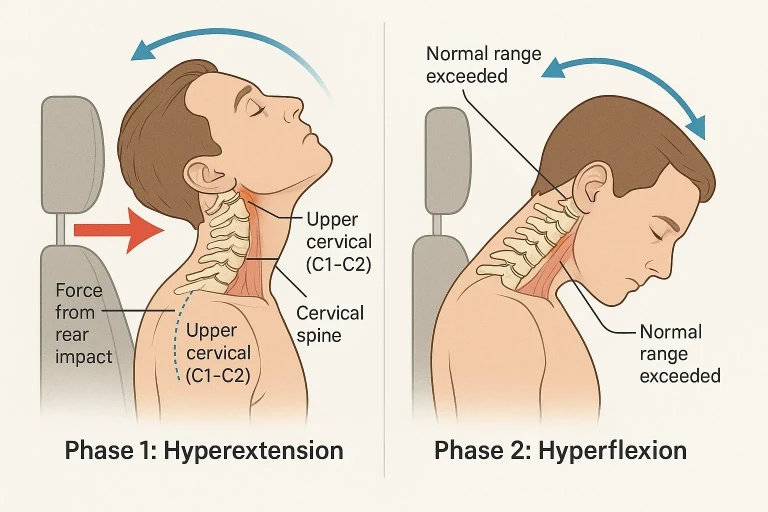
The upper cervical spine consists primarily of two vertebrae located directly beneath your skull:
The atlas (C1): The first cervical vertebra supports the skull and contributes to head movement and positioning.
The axis (C2): The second cervical vertebra works with the atlas to allow much of the head's side-to-side rotation.
Together, these vertebrae form a highly mobile region that helps you look left, look right, and coordinate head position.
The surrounding muscles, joints, ligaments, and nerves also contribute to neck stability and awareness of head movement.
When these tissues become irritated or movement is restricted, you may experience discomfort near the base of your skull, difficulty turning your head, or stiffness after remaining in one position.
Upper cervical joint dysfunction is one possible contributor to these symptoms, but it cannot be diagnosed from the location of pain alone.
Why Does the Base of My Skull Feel Tight in the Morning?
Small muscles known as the suboccipital muscles connect the upper cervical vertebrae with the skull.
These muscles help control subtle head movements and stabilize the head during everyday activities.
When your head remains in an awkward position overnight, these muscles can become uncomfortable or tense.

You may notice:
- Tenderness immediately beneath the skull
- Stiffness when turning your head
- Tightness extending into the upper shoulders
- Discomfort after prolonged sitting
- Occasional headaches accompanying neck pain
Because several conditions can produce similar symptoms, evaluating both the muscles and cervical joints can help identify which structures may be contributing.
Can the Wrong Pillow Cause Upper Cervical Neck Pain?
Yes. An unsuitable pillow can contribute to morning neck pain by keeping the cervical spine in an uncomfortable position for extended periods.
The most important consideration is whether the pillow supports your head and neck in a relatively neutral position.
A pillow that works for someone who sleeps on their back may not provide enough support for someone who sleeps on their side.
Side Sleeping
When sleeping on your side, your pillow should generally fill the space between your head and the mattress so your neck remains aligned with the rest of your spine.
A pillow that is too thin allows your head to tilt downward. A pillow that is too thick pushes it upward.
Both positions can place unnecessary strain on cervical tissues.
Back Sleeping
Back sleeping can be comfortable when the pillow supports your neck without pushing your chin excessively toward your chest.
A pillow with appropriate neck support may help maintain a comfortable resting position.
Stomach Sleeping
Stomach sleeping generally requires rotating your head to one side for extended periods.
For people who already experience neck stiffness, this sustained rotation can aggravate symptoms.
Trying a side- or back-sleeping position may help reduce the mechanical demands on the neck.
There is no single pillow that is best for everyone. Pillow selection should account for sleeping position, body proportions, mattress firmness, and individual comfort.
Why Is My Neck Stiff Every Morning but Better Later?
Morning stiffness that improves after movement is often associated with musculoskeletal causes.
During sleep, the cervical joints and surrounding muscles remain relatively inactive. When you begin moving in the morning, circulation increases, muscle activity resumes, and some stiffness may gradually ease.
However, recurring stiffness can also be associated with conditions such as degenerative joint changes or inflammatory disorders.
The pattern matters.
If discomfort appears only after an unusual sleeping position and resolves quickly, modifying your pillow or sleep posture may be sufficient.
If symptoms occur nearly every morning, last longer, or gradually worsen, a professional evaluation may help clarify the cause.

How Is Blair Upper Cervical Chiropractic Different?
Blair Upper Cervical Chiropractic is a specialized approach that focuses on the anatomical relationships and mechanics of the upper cervical spine, particularly the atlas and axis.
Rather than applying the same adjustment to every patient, Blair practitioners use an individualized examination to determine whether an upper cervical intervention may be appropriate.
At PRC Pierce Ringstad Chiropractic in Roseville, Dr. Celia Ringstad and Dr. Paul Pierce provide Blair Upper Cervical care using gentle techniques that do not involve conventional forceful neck twisting, popping, or cracking.
A consultation may include a review of your symptoms, previous injuries, posture, cervical movement, and relevant examination findings.
The practice also uses imaging when clinically indicated.
Can Upper Cervical Chiropractic Help With Morning Neck Stiffness?
For some patients with mechanical neck pain, conservative chiropractic care may be one component of an individualized management plan.
The goals may include improving comfortable neck movement, addressing joint-related discomfort, and helping patients understand habits that place unnecessary strain on the cervical spine.
Research supports certain combinations of manual therapy and exercise for managing some types of neck pain. However, research specifically establishing the effectiveness of Blair Upper Cervical Chiropractic for morning neck pain is limited.
That distinction is important.
An examination should determine whether care is appropriate rather than assuming that every episode of morning neck pain comes from the atlas or axis.
Patients should also understand the potential benefits, limitations, alternatives, and risks of any proposed treatment.
Five Things You Can Do to Reduce Morning Neck Pain
Before replacing your mattress or making major lifestyle changes, consider these practical steps.
1. Check your pillow height.
When lying on your side, your head should not tip dramatically toward or away from the mattress. When lying on your back, avoid excessive forward bending of the neck.
2. Avoid prolonged stomach sleeping.
Try transitioning to a supported side- or back-sleeping position if stomach sleeping consistently aggravates your symptoms.
3. Keep your neck moving comfortably during the day.
Gentle movement and regular activity can help prevent the stiffness associated with remaining in one position for too long.
4. Improve your workstation setup.
Keep frequently used screens in a comfortable viewing position, avoid holding your phone between your ear and shoulder, and take regular movement breaks.
5. Track your morning symptoms.
For one or two weeks, record which side of your neck hurts, how long the stiffness lasts, what sleeping position you used, and whether changing your pillow makes a difference.
These details can be useful during a clinical evaluation.
Avoid aggressive self-manipulation or forceful stretching, particularly when your neck is acutely painful.
When Should Morning Neck Pain Be Evaluated?
Occasional mild stiffness may settle with self-care. Arrange a clinical assessment if pain persists for several weeks, repeatedly interferes with sleep, limits normal activity, or is accompanied by arm pain, tingling, or numbness.
Seek urgent medical attention for neck pain with new or worsening neurological symptoms such as weakness, difficulty walking, double vision, slurred speech, or trouble swallowing.
Severe neck pain after significant trauma, or neck stiffness with fever and a severe headache, also requires urgent assessment.
A chiropractor should refer patients for medical evaluation when symptoms suggest a condition outside the scope of chiropractic care.
Frequently Asked Questions About Waking Up With Neck Pain
1. Why do I wake up with neck pain on only one side?
One-sided morning neck pain may result from sleeping with your head rotated, muscle strain, or irritation of a cervical joint. Persistent one-sided pain should be evaluated rather than automatically attributed to sleeping position.
2. Can C1 or C2 problems cause neck stiffness?
The C1 and C2 vertebrae are important for upper-neck movement. Problems involving their joints or surrounding tissues can contribute to restricted movement and discomfort, although these symptoms do not by themselves confirm an upper cervical disorder.
3. Is it better to sleep without a pillow if my neck hurts?
Not necessarily. Most people benefit from appropriate support that keeps the head and neck comfortable. Sleeping without a pillow may help some individuals but worsen positioning for others, particularly side sleepers.
4. Can upper cervical chiropractic fix my sleeping posture?
Upper cervical chiropractic does not automatically correct a sleeping position. A chiropractor may help evaluate mechanical neck symptoms and recommend appropriate adjustments to daily habits, pillow support, or other aspects of care.
5. How long should morning neck stiffness last?
Mild stiffness from an awkward sleeping position may improve over hours or days. If it repeatedly returns, worsens, or continues for several weeks, a healthcare professional should evaluate the cause.
6. When should I see an upper cervical chiropractor in Roseville?
Consider an evaluation when recurring neck stiffness or restricted motion affects your comfort or daily activities. A qualified practitioner can assess whether the upper cervical joints may be contributing and whether chiropractic care, another conservative approach, or medical referral is appropriate.
Upper Cervical Chiropractic Care in Roseville, CA
Waking up with neck pain should not become an accepted part of your morning routine.
Sometimes, the solution involves simple changes to pillow support, sleeping position, or daily movement habits. In other cases, persistent symptoms warrant a closer examination of the cervical spine.
At PRC Pierce Ringstad Chiropractic, Dr. Celia Ringstad and Dr. Paul Pierce offer individualized Blair Upper Cervical Chiropractic care for patients seeking an evaluation of neck discomfort and spinal function.
If recurring morning neck stiffness is limiting your movement or affecting your daily routine, contact the practice to discuss whether an upper cervical consultation is appropriate.
PRC Pierce Ringstad Chiropractic
115 Ascot Dr, Suite 120
Roseville, CA 95661
Phone: (916) 773-0200
Website: https://rosevilleblairchiro.com
Medical information disclaimer: This article is for general education and does not replace an individualized medical diagnosis or treatment recommendation. Chiropractic care is not appropriate for every cause of neck pain, and treatment outcomes vary.
Leave a comment