

Have you ever turned your head and suddenly felt dizzy, unsteady, or disoriented? Perhaps you experience persistent neck stiffness, pressure at the base of your skull, or difficulty maintaining your balance.
While dizziness is often associated with inner ear conditions, the relationship between the upper cervical spine and the body's balance system is another area worth exploring.
At PRC Pierce Ringstad Chiropractic, also known as Roseville Blair Chiropractic in Roseville, California, we focus on the relationship between upper cervical spinal function, movement, and neurological communication.
Understanding this connection may help you identify appropriate next steps when neck pain and dizziness occur together.
Can Neck Pain Cause Dizziness?
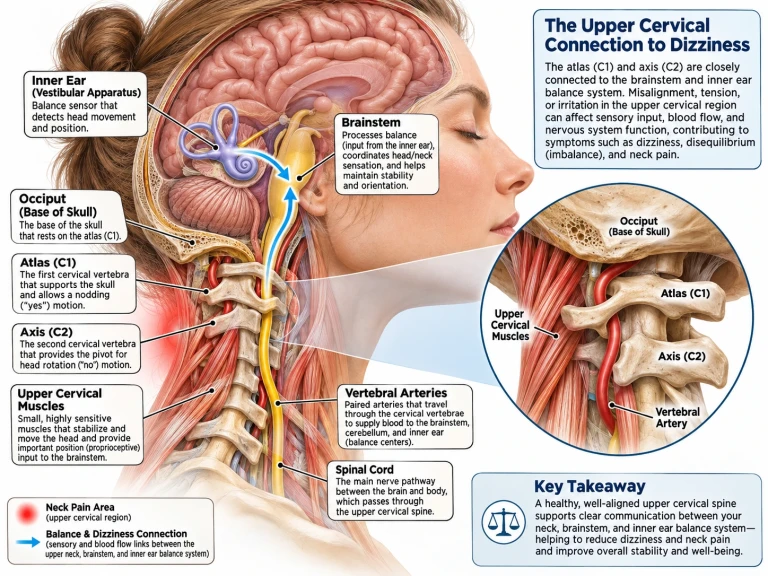
Neck dysfunction may contribute to dizziness in certain individuals through altered sensory communication between the cervical spine and the brain. This potential condition is commonly called cervicogenic dizziness, or cervical dizziness.
The muscles and joints of the neck contain specialized sensory receptors that provide information about head position, movement, and spatial orientation.
When cervical joint mobility is restricted or surrounding muscles become irritated, this sensory information may be altered, potentially contributing to feelings of imbalance or disorientation.
However, neck pain and dizziness occurring together do not automatically establish a cervical cause. Inner ear disorders, migraines, neurological conditions, and cardiovascular problems must also be considered.
How the Upper Cervical Spine Influences Balance
The upper cervical spine consists primarily of the first two vertebrae:
- Atlas (C1): Supports the skull and contributes to head positioning and movement.
- Axis (C2): Provides a pivot that allows the head to rotate.
These vertebrae and their surrounding muscles, joints, and ligaments play an important role in proprioception, the body's ability to recognize its position in space.
Your brain relies on three primary sources of information to maintain balance:
- The vestibular system within the inner ear.
- The visual system.
- Proprioceptive information from muscles and joints, including those in the neck.
These systems continuously communicate to coordinate posture, eye movements, and balance.
One proposed explanation for cervical dizziness involves a mismatch between sensory information coming from the neck and information received from the eyes and inner ears.
This neurological mechanism may help explain why some individuals experience neck discomfort alongside balance disturbances, although the precise relationship remains under investigation.
What Are the Symptoms of Cervicogenic Dizziness?
Cervical dizziness is generally described as a sensation of instability or disorientation associated with neck discomfort.
Potential symptoms include:
- Persistent neck pain or stiffness.
- Dizziness associated with neck movement.
- A floating, rocking, or unsteady sensation.
- Reduced cervical range of motion.
- Headaches near the base of the skull.
- Difficulty maintaining balance.
- Neck and shoulder muscle tension.
Some individuals notice symptoms after prolonged computer use, sustained head positions, or previous neck injuries.
These patterns can provide useful clinical information, but they are not sufficient to diagnose cervicogenic dizziness without evaluating other possible causes.
What Can Contribute to Upper Cervical Dysfunction?
The upper cervical region must balance mobility with stability. Several factors can contribute to mechanical stress, muscle irritation, and restricted movement in this area.
Common contributing factors include:
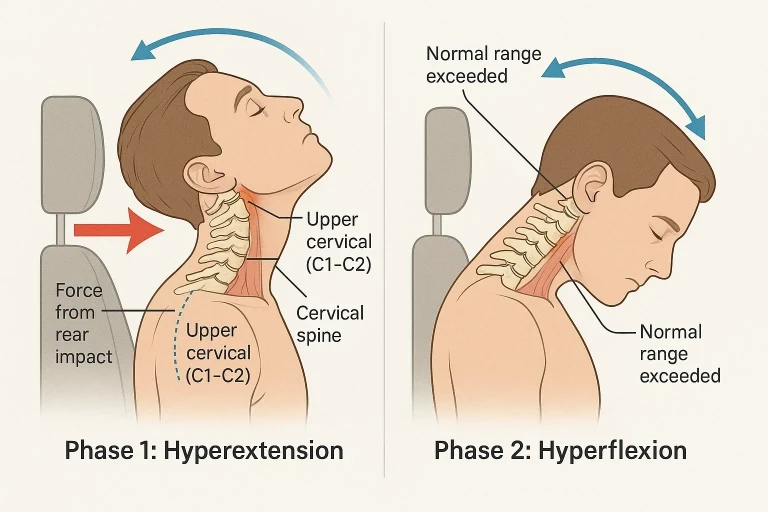
- Whiplash and previous automobile accidents.
- Sports-related neck injuries.
- Prolonged forward head posture.
- Extended computer and smartphone use.
- Repetitive physical stress.
- Poor sleeping positions.
- Age-related cervical joint changes.
Previous injuries may be particularly relevant when evaluating persistent neck pain and associated dizziness.
A comprehensive examination can help determine whether cervical dysfunction is contributing to symptoms or whether another healthcare specialist should be involved.
Cervicogenic Dizziness vs. Vertigo: What Is the Difference?

Dizziness is a broad term that describes several different sensations, while vertigo specifically involves a false sensation of movement.
Cervical dizziness is often associated with neck discomfort, restricted movement, and unsteadiness. Vertigo caused by inner ear disorders, such as benign paroxysmal positional vertigo (BPPV), frequently produces spinning sensations associated with changes in head position.
Vestibular migraine can also produce dizziness, neck pain, and motion sensitivity.
Because these symptoms can overlap, identifying their underlying cause is essential before beginning treatment.
How Can Blair Upper Cervical Chiropractic Help?
Blair Upper Cervical Chiropractic is a specialized approach focusing on the anatomical relationships and mechanical function of the upper cervical spine.
Unlike techniques involving conventional neck twisting or cracking, the Blair technique uses individualized, targeted upper cervical adjustments.
At Roseville Blair Chiropractic, Dr. Celia Ringstad and Dr. Paul Pierce emphasize careful assessment and individualized treatment decisions.
Our approach may include:
- A detailed health and injury history.
- Upper cervical spinal assessment.
- Evaluation of cervical mobility and physical findings.
- Diagnostic imaging when clinically indicated.
- Specific Blair Upper Cervical adjustments when appropriate.
- Pre-adjustment and post-adjustment reassessment.
The goal is to address relevant cervical joint dysfunction, support comfortable movement, and monitor the patient's functional response.
A 2022 systematic review published in the Journal of Manual & Manipulative Therapy found moderate-quality evidence supporting certain manual therapy approaches for patients classified as having cervicogenic dizziness.
However, research specifically establishing the effectiveness of the Blair technique for dizziness remains limited. Upper cervical chiropractic care is not a substitute for appropriate medical or vestibular evaluation.
When Should Neck Pain and Dizziness Be Taken Seriously?
Although some cases involve musculoskeletal or vestibular dysfunction, neck pain combined with dizziness can occasionally indicate a serious medical condition.
Seek emergency medical attention if you experience:
Related article
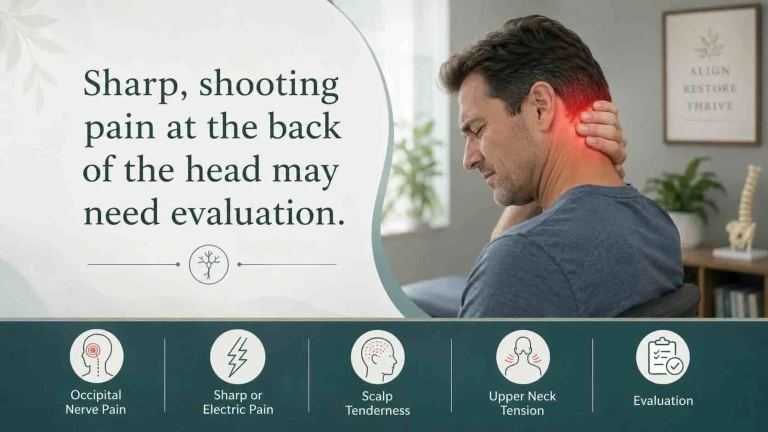
Sharp Pain at the Back of Your Head? Understanding Occipital Neuralgia in Roseville
Aug 05, 2026- Sudden, severe, or unusual neck pain or headache accompanied by dizziness.
- Double vision or sudden vision loss.
- Difficulty speaking or swallowing.
- Facial, arm, or leg weakness or numbness.
- Sudden inability to walk or maintain balance.
- Loss of consciousness.
These symptoms may indicate a stroke or cervical artery dissection. New or unexplained dizziness should be medically evaluated before undergoing cervical manipulation.
Frequently Asked Questions About Neck Pain and Dizziness
Can the atlas vertebra contribute to dizziness?
The muscles and joints surrounding the atlas provide sensory information involved in head positioning and balance. Dysfunction in this region may contribute to dizziness in some individuals, although other causes must be evaluated.
Can a chiropractor help with neck-related dizziness?
Certain manual therapy approaches may help appropriately evaluated patients with cervical dizziness. Results vary, and evidence specifically supporting Blair Upper Cervical Chiropractic for dizziness remains limited.
Can tight neck muscles make you feel dizzy?
Neck muscle tension may alter proprioceptive input and contribute to sensations of imbalance. However, muscle tension alone does not establish the cause of dizziness.
Can whiplash cause dizziness years after an accident?
Some individuals experience persistent or recurring neck discomfort and dizziness following whiplash. An evaluation can help determine whether previous cervical injury remains clinically relevant.
How long does upper cervical chiropractic care take to work?
There is no universal recovery timeline. Progress depends on the underlying condition, injury history, treatment appropriateness, and individual response to care.
Upper Cervical Chiropractic Care in Roseville, California
Living with persistent neck pain and dizziness can interfere with driving, working, exercising, and everyday activities.
At PRC Pierce Ringstad Chiropractic, we provide specialized Blair Upper Cervical Chiropractic care with an emphasis on individualized assessment and conservative treatment.
If you are experiencing persistent neck discomfort and have received appropriate medical evaluation for your dizziness, schedule a consultation to explore whether upper cervical dysfunction may be contributing to your symptoms.
Discover whether Blair Upper Cervical Chiropractic is appropriate for you.
PRC Pierce Ringstad Chiropractic – Roseville Blair Chiropractic
115 Ascot Drive, Suite 120
Roseville, CA 95661
Phone: (916) 773-0200
Website: https://rosevilleblairchiro.com
Leave a comment