


Neck pain doesn't always stay in your neck. Sometimes, the first sign of a problem is tightness across your shoulders, discomfort near your shoulder blade, or an aching sensation that returns after a long day.
If you've experienced persistent neck and shoulder pain, you may wonder why these two areas seem so closely connected.
The answer lies in the relationship between your cervical spine, surrounding muscles, nerves, and shoulder girdle.
At Roseville Blair Chiropractic, Dr. Celia Ringstad and Dr. Paul Pierce take an individualized approach to evaluating neck-related concerns through Blair Upper Cervical Chiropractic.
Understanding where your pain originates is an important first step toward choosing appropriate care.
Why Are the Neck and Shoulders Connected?
Your head doesn't rest on your spine independently. An interconnected network of muscles, ligaments, joints, and nerves helps support your head while coordinating movement throughout your neck, shoulders, and upper back.
Several important muscles contribute to this connection:
- Trapezius: Extends across the neck, shoulders, and upper back, supporting movement and stabilization.
- Levator scapulae: Connects the upper cervical spine to the shoulder blade and helps elevate the scapula.
- Sternocleidomastoid: Helps rotate and flex the head and neck.
- Deep cervical muscles: Assist with spinal stability, posture, and controlled movement.
When these muscles experience sustained tension or overload, discomfort can develop in more than one location.
For example, imagine driving from Roseville to Sacramento during heavy traffic.
Your head gradually moves forward. One arm stays on the steering wheel while you repeatedly turn your head to check mirrors.
By the time you arrive, your shoulder may feel tight even though the physical strain involved both your neck and shoulder muscles.
Neck-related muscle strain can produce shoulder discomfort because these structures work together during everyday activities.
Three Common Reasons Neck Pain Spreads to the Shoulder
Not all neck and shoulder pain has the same cause. Identifying the likely source helps determine which treatment options may be appropriate.
1. Muscle Tension and Prolonged Posture
One of the most common reasons for neck and shoulder discomfort is sustained muscular activity.
Working at a computer, looking down at a smartphone, or driving for extended periods can keep the neck and shoulder muscles active without sufficient movement variation.
Over time, this may contribute to:

- Tightness across the upper shoulders
- Stiffness when turning the head
- Tenderness around the shoulder blades
- Discomfort after prolonged sitting
While posture alone doesn't explain every case of neck pain, prolonged positions can aggravate sensitive muscles and joints.
Regular movement breaks and ergonomic adjustments may help reduce this strain.
2. Cervical Joint and Soft Tissue Irritation
Your cervical spine contains seven vertebrae, connected by joints, muscles, ligaments, and intervertebral discs.
These structures allow you to turn, bend, and stabilize your head.
When cervical joints or surrounding tissues become irritated, pain may be experienced locally or referred into the upper shoulder region.
This can occur following physical strain, sudden movements, or certain neck injuries.
Sometimes, the shoulder itself is functioning normally even though the discomfort appears to originate there.
A clinical examination can help distinguish neck-related pain from a primary shoulder condition.
3. Cervical Nerve Irritation
Nerves leaving the cervical spine provide sensation and muscle control to parts of the shoulders, arms, and hands.
When a cervical nerve root becomes compressed or inflamed, a condition called cervical radiculopathy may develop.
Possible symptoms include:
- Pain traveling from the neck toward the shoulder or arm
- Tingling or numbness
- Burning or electric-like sensations
- Weakness in the arm or hand
These symptoms warrant appropriate medical evaluation, particularly when weakness is new or progressing.
Not every painful shoulder indicates a pinched nerve, which is why accurate assessment matters.
Why Does Massage Sometimes Provide Only Temporary Relief?
Massage can help reduce muscular tension and provide short-term relief for some people experiencing neck and shoulder discomfort.
However, symptoms may return if contributing factors remain unchanged.
Related article
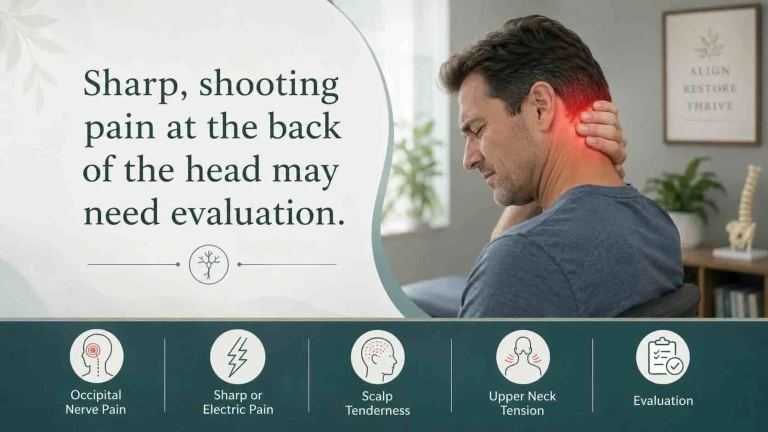
Sharp Pain at the Back of Your Head? Understanding Occipital Neuralgia in Roseville
Aug 05, 2026For example, someone who repeatedly spends eight hours working with their head extended forward may experience renewed discomfort even after a relaxing massage.
The underlying issue may involve several factors, including limited movement variation, insufficient muscular endurance, stress, or irritated cervical structures.
This doesn't mean massage is ineffective.
Rather, lasting improvement may require a broader approach that addresses the factors contributing to recurring symptoms.
Exercise, activity modification, ergonomic changes, and other appropriate treatments may all play a role.
Can the Upper Cervical Spine Contribute to Shoulder Pain?
The upper cervical spine consists primarily of the atlas (C1) and axis (C2), located directly beneath the skull.
These vertebrae contribute significantly to head rotation and overall neck movement.
The surrounding muscles connect with other cervical and shoulder structures, making the upper neck part of the larger system responsible for movement and postural control.
When upper cervical movement is restricted or painful, nearby muscles may respond with increased protective tension.
However, shoulder pain can arise from many different sources, and symptoms alone cannot establish that the atlas or axis is misaligned.
A thorough evaluation is necessary to determine whether the neck, shoulder, or another structure is contributing to the discomfort.
How Does Blair Upper Cervical Chiropractic Approach Neck Discomfort?
At PRC Pierce Ringstad Chiropractic in Roseville, California, Dr. Celia Ringstad and Dr. Paul Pierce specialize in Blair Upper Cervical Chiropractic.
This technique focuses on individualized examination and targeted adjustments involving the upper cervical region.
Unlike some traditional cervical manipulation methods, Blair adjustments are designed without forceful neck twisting or the deliberate cracking commonly associated with certain chiropractic techniques.
The approach emphasizes clinical assessment and determining when an adjustment may be appropriate.
An important part of care is monitoring how patients respond rather than assuming that every visit requires an adjustment.
Blair Upper Cervical Chiropractic is a specialized technique, although research demonstrating superiority over other evidence-based treatments for neck and shoulder pain remains limited.

Patients should discuss potential benefits, treatment alternatives, and risks with their clinician.
What Can You Do to Reduce Neck and Shoulder Tension?
Small adjustments to everyday activities may help reduce recurring muscular discomfort.
Change positions regularly. Avoid remaining in one posture for extended periods. Brief movement breaks can help.
Review your workstation. Keep your monitor at a comfortable viewing height and avoid reaching excessively toward your keyboard.
Stay physically active. Appropriate strengthening and mobility exercises can improve muscular endurance and movement tolerance.
Pay attention to recurring symptoms. If pain persists, worsens, or interferes with daily activities, seek a professional assessment.
Sudden severe pain, new neurological symptoms, or pain following significant trauma requires prompt medical attention. Chest pain accompanied by shoulder discomfort, shortness of breath, or sweating may indicate an emergency.
Frequently Asked Questions About Neck and Shoulder Pain
Can Neck Problems Cause Shoulder Pain?
Yes. Muscles, joints, and nerves in the cervical region can contribute to pain felt in the shoulder. However, shoulder injuries and other medical conditions can cause similar symptoms.
Why Does My Shoulder Hurt When I Turn My Neck?
Turning your neck activates cervical muscles and joints. If these structures are irritated, the movement may reproduce pain around the shoulder. A professional examination can help identify the source.
Can a Pinched Nerve Cause Neck and Shoulder Pain?
Yes. Cervical nerve root irritation may cause pain radiating toward the shoulder, sometimes accompanied by numbness, tingling, or weakness.
Can Upper Cervical Chiropractic Help Neck and Shoulder Pain?
Some patients seek upper cervical chiropractic care for neck-related discomfort. Whether it is appropriate depends on the diagnosis, examination findings, clinical risks, and individual treatment goals.
Neck and Shoulder Pain Evaluation in Roseville, CA
Recurring neck and shoulder discomfort can interfere with work, driving, sleep, and everyday activities.
Understanding the relationship between your cervical spine and shoulder muscles can help you make informed decisions about your care.
At Roseville Blair Chiropractic, Dr. Celia Ringstad and Dr. Paul Pierce provide individualized Blair Upper Cervical evaluations, with an emphasis on gentle techniques and assessment-based treatment decisions.
If you're experiencing persistent neck and shoulder discomfort in Roseville, California, contact our office to learn whether an upper cervical consultation may be appropriate.
PRC Pierce Ringstad Chiropractic
115 Ascot Dr, Suite 120, Roseville, CA 95661
Phone: (916) 773-0200
Website: https://rosevilleblairchiro.com
Leave a comment